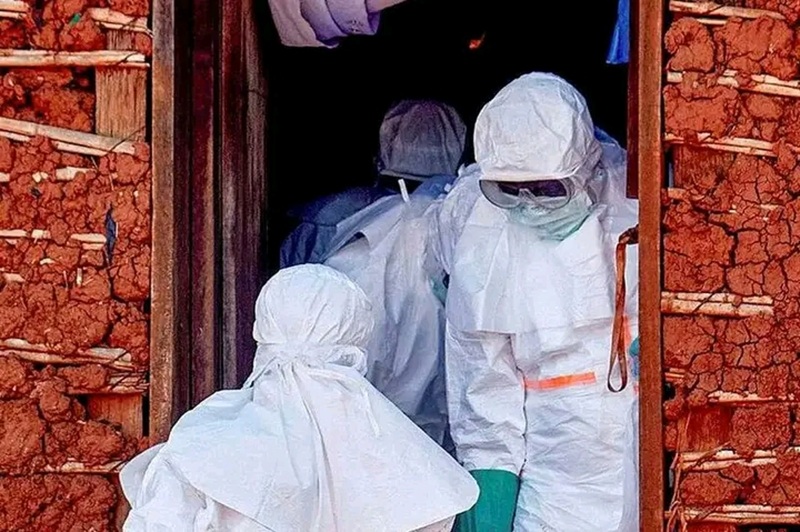
The Government of the Democratic Republic of the Congo (DRC) announced on Thursday, June 25, 2026, a major reinforcement of its response system against the Ebola virus. This decision comes amid concerns following a confirmed case in France involving a humanitarian doctor who had stayed in an epidemic zone in the DRC.
In an official statement, the Congolese executive described the situation as a “serious health alert signal” and stated its intent to anticipate any chain of transmission that could cross national borders. Authorities believe this measure aligns with a logic of maximum prevention, in accordance with international health security recommendations.
Strict 21-day quarantine for travelers from risk areas
The main measure now concerns the mobility of people coming from Ebola-affected areas. Anyone who has stayed in an outbreak zone must undergo a mandatory isolation period of 21 days, corresponding to the maximum incubation period of the virus.
This quarantine applies to both internal movements and international travel. According to health authorities, the measure aims to “cut any possibility of silent propagation” and to strengthen the monitoring of suspected cases, especially those who do not immediately show symptoms.
The Ministry of Health insists that this strategy is based on a reinforced precautionary approach, in a context where international mobility can accelerate the spread of highly infectious diseases.
Doctor case in France at the heart of concerns
The decision follows the confirmation by French health authorities of an Ebola case in a doctor who recently worked in an affected area in the DRC. The patient was placed in isolation upon detection of the virus, and an epidemiological investigation was immediately opened.
According to initial information, the doctor showed no apparent symptoms during his journey from Ituri Province to Kinshasa, before leaving the country. This situation raises questions about the difficulty of detecting some cases in the pre-symptomatic phase, despite screening measures at points of entry.
French authorities have activated emergency protocols and begun contact tracing, while assessing the level of risk to the general population, currently considered “low but under surveillance.”
DRC–France cooperation and contact tracing
In a spirit of transparency and international coordination, Kinshasa says it has officially contacted French authorities to share travel data and medical information regarding the patient. This collaboration aims to trace all possible contacts on Congolese soil and strengthen the epidemiological monitoring chain. It falls within the framework of the International Health Regulations (IHR), which require states to cooperate in the event of a cross-border health threat. The Congolese government stresses the need for rapid and structured information exchange to limit any risk of secondary spread.
Strengthened and multisectoral national response
At the national level, health authorities indicate that the response is being intensified in affected areas, particularly in Ituri. Medical teams are mobilized to reinforce community surveillance, management of suspected cases, and awareness-raising among local populations. Enhanced health control measures are also being considered at strategic transit points, including airports and major transport routes, to limit unsupervised movements. The government also calls on community leaders, the media, and civil society to play an active role in awareness campaigns, especially regarding disease symptoms and prevention measures.
Call for vigilance and international coordination
Congolese authorities recall that the fight against Ebola also relies on public trust and the speed of reporting suspected cases. They urge citizens to avoid stigmatizing patients and to cooperate with health teams. As the World Health Organization continues to closely monitor the situation, the DRC says it remains on maximum alert and determined to contain any spread of the epidemic. In this context, Kinshasa is relying on a combination of strict measures, international cooperation, and community mobilization to sustainably stem the threat and prevent any dissemination beyond national borders.
You may also like
Can Washington force third-country deportations? Ivory Coast’s refusal raises the stakes
Will Benin’s AEO exporters finally crack the Chinese market?
Northern Niger’s unanswered question: can Tiani’s government deliver water and power where it matters most?
Can Air Sénégal survive the Interpol smuggling probe? The stakes for crew, passengers and the airline’s future
As donor fatigue spreads, can Benin’s €544,042 UNAIDS pledge keep the HIV response on track?