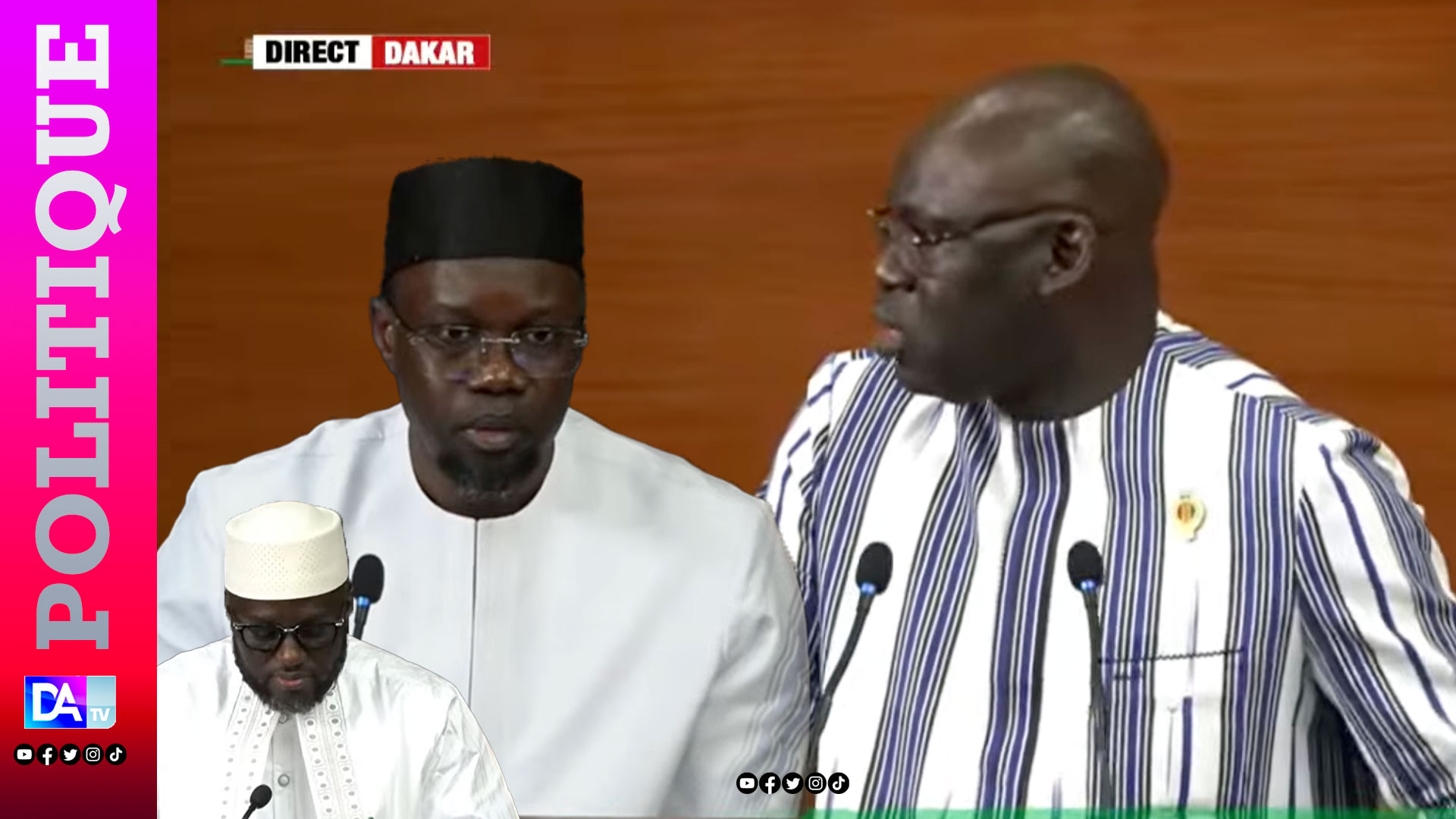
A political message from the hemicycle
Mbaye Dione’s address at the National Assembly went beyond economic discussions about the IMF, debt, and local government endowment funds. In the final part of his speech, the deputy chose to broaden his remarks to the national political situation and the climate between the government and the opposition.
Addressing the president of the National Assembly, he asked that a message be conveyed to Ousmane Sonko. He intended this message to be solemn, given what he described as an unusual level of political tension.
‘We are not his enemies’
The most striking line of his intervention will likely remain this one: ‘We are not his enemies. We are his opponents.’
Through this declaration, Mbaye Dione aimed to draw a clear line between political opposition and personal hostility. For him, opposing a government, a majority, or a political direction does not mean being against the country, much less being an enemy of those in power.
The deputy thus reminded that Senegal’s opposition claims a republican stance. In his words, it intends to fully play its role in democratic debate — supporting the government when necessary, but also opposing when it deems appropriate.
A reminder of Ousmane Sonko’s own opposition background
Mbaye Dione also invoked Ousmane Sonko’s political past to bolster his point. He recalled that Sonko himself was once a prominent opposition figure and used institutional platforms to express his disagreements.
According to the deputy, Ousmane Sonko must now accept that other political figures do not share his positions. He believes contradiction is part of normal democratic functioning.
For Mbaye Dione, someone who opposed in the past should be able to tolerate opposition today. He thus called for a form of political consistency in how adversaries are treated.
The National Assembly must not become a place for settling scores
In his speech, Mbaye Dione also stressed the role of the National Assembly in the country’s institutional balance. He reminded that this institution holds an important rank in the Republic and must remain a space for debate, oversight, and accountability.
The deputy warned against any attempt to turn the hemicycle into a venue for personal confrontation or political score-settling. In his view, the National Assembly must serve the country, not become a stage for clashes between camps.
This warning reflects a broader concern: preserving the dignity of Parliament and the quality of democratic debate.
An opposition that claims responsibility
Mbaye Dione presented the opposition as a responsible force committed to republican principles. He indicated that opposition deputies are not pursuing systematic obstruction but rather a vigilant approach.
‘We will act as responsible republicans, as courageous opponents,’ he essentially declared.
With these words, the deputy aims to defend an opposition that can support good decisions while firmly contesting those it considers contrary to the national interest.
A call for political calm
Beyond the challenge addressed to Ousmane Sonko, Mbaye Dione’s intervention serves as a call for calm in relations between the government and the opposition. The parliamentarian invites the new authorities to recognize the legitimacy of political contradiction.
His message rests on a simple idea: in a democracy, governing does not mean silencing the opposition, and opposing does not mean working against the country.
By reminding that opponents are not enemies, Mbaye Dione attempts to reframe political debate on institutional and republican grounds.