malian court hands 20-year sentence to french agent over state security charges
News Update. In a development highlighting significant diplomatic strains between Paris and Bamako, Mali’s judicial system has sentenced a French intelligence operative to two decades in prison. France has vehemently rejected these accusations, labeling them as “without foundation.”
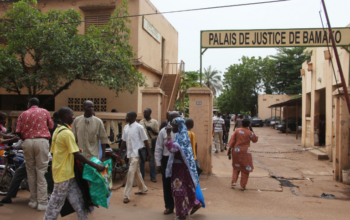
A new chill has settled over relations between Paris and Bamako as a Malian court recently handed down a 20-year sentence to a French intelligence agent. The conviction, for “undermining state security,” was confirmed by judicial sources on Friday, June 5.
The individual, identified as Yann V., held diplomatic immunity and was officially assigned to the French Embassy in Mali. Malian intelligence services apprehended him in Bamako on August 13, 2025.
Accusations of plotting against institutions
Malian authorities allege that the French officer was involved in an espionage ring designed to destabilize the country’s transitional institutions and orchestrate a coup d’état. Several Malian military officers implicated in the same case remain in custody, awaiting trial.
In addition to his prison term, the French national faces a 20-year ban from Mali and must pay a fine of approximately 5,400 euros.
France refutes allegations
Following Yann V.’s arrest in 2025, France swiftly condemned the accusations as “unfounded.” In response, Paris suspended its counter-terrorism cooperation with Bamako and expelled two Malian diplomats, escalating the diplomatic crisis in the West Africa Sahel region.
Deepening diplomatic tensions
This latest conviction further exacerbates the strained relationship between Mali and its traditional Western allies. Since the coups d’état in 2020 and 2021, the ruling junta in Mali has progressively distanced itself from France, the former colonial power, opting instead to strengthen its political and military ties with Russia. This shift marks a significant realignment in Sahel politics today.