Mali 2025: Human Rights Crisis Worsens Amid Repression and Conflict
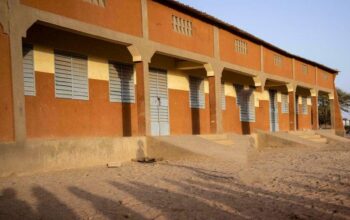
The Malian authorities have further tightened restrictions on freedom of expression, peaceful assembly, and association. Political opponents and civil society members face arbitrary arrests, forced disappearances, and unlawful detentions. Government forces, allied militias, and armed groups continue to perpetrate illegal attacks and killings against civilians, while blockades imposed by militants disrupt life in several cities. As of mid-2025, over 2,036 schools remain closed due to conflict, depriving hundreds of thousands of children of education.
Background and Political Context
Following the collapse of a prior peace process—boycotted by political parties, civil society, and certain armed factions—authorities introduced the National Charter for Peace and Reconciliation in February. In April, the political transition initiated after the 2020 military coup was extended by five years, deepening concerns over democratic backsliding.
In June, the Wagner Group, a Russian private military entity, was replaced by the Africa Corps, a state-controlled force under the Russian Ministry of Defence, formalized through a security partnership with Mali.
By August, authorities claimed to have thwarted a military coup, arresting multiple officers and a French diplomat with alleged intelligence ties. The same month, Mali announced its intention to withdraw from the International Criminal Court (ICC).
Suppression of Civil Liberties
The dissolution of all political parties in early 2025 marked a stark escalation in the repression of freedom of expression, association, and peaceful assembly. Protests in Bamako against this decision were met with violent crackdowns by security forces in April and May.
Forced Disappearances and Targeted Abductions
Security forces and unidentified armed groups have systematically targeted activists, civil society leaders, and political figures through forced disappearances.
On March 14, Alou Badra Sacko—coordinator of the February 20th Appeal and president of the civil society movement Touche pas à mon argent—was abducted in central Bamako by masked gunmen. He was held in an undisclosed location before his release on May 24, days after publicly advocating for the removal of mobile money transaction taxes.
On May 8, El Bachir Thiam, leader of the Yelema Party, was forcibly taken from his home. His whereabouts were unknown until his release on September 26, following international pressure, including from the UN Human Rights Council. Thiam had been a vocal critic of both the dissolution of political parties and the extended transition.
The same day, masked assailants claiming to be gendarmes abducted Alhassane Abba, Secretary-General of the Convergence for Mali’s Development Party, from his Bamako residence. He was freed on June 5 without charges or legal proceedings.
Arbitrary Arrests and Detentions
In March, the UN Human Rights Council demanded the immediate release of political activists Moulaye Baba Haïdara, Mahamoud Mohamed Mangane, and Amadou Togola. Detained since 2023 on charges including ‘undermining state security’ and ‘endangering national unity’, they reported torture during captivity.
Former Prime Minister Moussa Mara was arrested in August after posting on X that he would fight ‘by all means’ for the rights of detained critics. Charged with ‘damaging state credibility’ and ‘opposing legitimate authority’, he received a one-year prison sentence in October.
Anti-corruption campaigner Clément Dembele remains imprisoned despite a court ruling in April to drop all charges—stemming from 2023 accusations of threatening the president and his family. The UN reiterated calls for his unconditional release in August.
Armed Group Violence and Civilian Targeting
Armed factions continue to conduct unlawful attacks, killings, and abductions across central and northern Mali.
In February, 34 civilians were killed when Islamic State in the Greater Sahara (ISGS) militants ambushed a civilian convoy near Gao’s Kobé village, despite military escort. In May, civil society leader Sidi Barka was abducted in Ménaka; his body was found in August near the city outskirts.
The mayor of Konna, Ousmane Kampo, was abducted by the Support Group for Islam and Muslims (GSIM) while working in his fields in May and released on October 4. In the same month, ISGS militants executed Mariam Cissé, a social media influencer, in Tonka after days of captivity.
In August, the Macina Katiba launched a deadly assault on Farabougou (Dogofry), killing civilians and displacing residents. Local leader Modibo Kimbiri and his driver were later killed by traditional hunters in a suspected case of mistaken identity.
Humanitarian Law Violations by State Forces
Government security forces and allied groups have committed grave violations of international humanitarian law, including torture and extrajudicial killings.
On March 16, a military drone strike in Ejdeïr (Tombouctou) killed at least 10 civilians during a market day. In April, FAMa and Wagner-affiliated forces detained around 100 men from the Fulani community in Sebabougou (Kayes). Survivors reported 60 were tortured and executed at the Kwala military camp; decomposing bodies were later discovered nearby.
On May 12, soldiers and Dozo militias executed 23 to 27 unarmed men at Diafarabé’s weekly market. Victims were blindfolded, bound, and transported by boat before summary execution and burial in mass graves. Despite pledges for investigation, no further details have been disclosed.
Impact on Economic and Social Rights
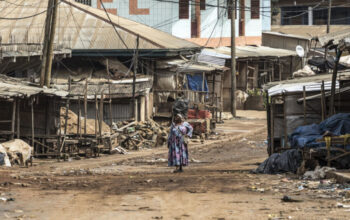
The GSIM has enforced blockades on key cities—including Gossi, Léré, and Diafarabé—restricting food security and freedom of movement. In July, it announced additional blockades around Kayes and Nioro du Sahel, targeting fuel shipments from Senegal and Côte d’Ivoire. Tanker trucks in western and central Mali have faced repeated ambushes.
Education Crisis Deepens
The security crisis has devastated Mali’s education system. By June, 2,036 schools were non-operational—up from 1,984 in 2024—leaving over 618,000 children out of school. The Kidal region is hardest hit, with 63% of children deprived of education due to ongoing violence.