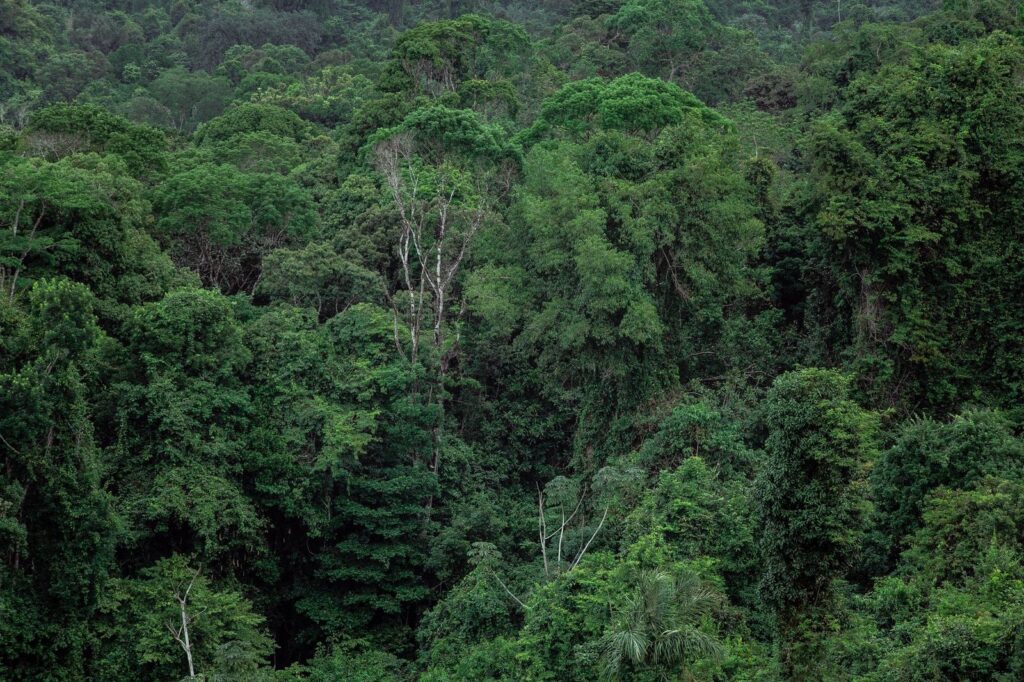
A significant collaboration is emerging between LVMH, the global luxury titan helmed by Bernard Arnault, and Gabon. The French conglomerate is on the verge of signing an exploratory memorandum of understanding with the Gabonese Agency for the Development of the Green Economy (Agadev). These discussions, reportedly taking place in Paris, center on LVMH’s procurement of non-timber forest products sourced from Gabon’s extensive forest reserves. The formal signing is anticipated just a month before an upcoming official visit.
Gabon’s strategic forest treasures: moabi and odika
Central to this initiative are two iconic species from the Congo Basin. The majestic moabi tree, which can soar to sixty meters, yields a highly valued oil renowned for its cosmetic and nutritional benefits. Odika, also known as wild chocolatier or wild mango, provides an aromatic kernel widely used in Central African cuisine and increasingly sought after by perfumery laboratories. These non-timber forest products, traditionally integral to local village economies, are now attaining premium ingredient status for European luxury houses.
LVMH’s interest in these unique resources aligns with a major trend within the industry. Leading cosmetic and perfumery brands are actively forging partnerships with countries rich in tropical biodiversity, seeking distinctive ingredients and compelling origin stories. Moabi and odika offer this dual advantage: botanical rarity coupled with a strong geographical heritage, qualities highly prized in the creation of high-end collections.
Agadev: driving Gabon’s economic diversification
Established to spearhead Gabon’s transition towards an economy less reliant on hydrocarbons, Agadev embodies the nation’s strategy to leverage its natural capital. With nearly 88% of its territory covered by forest, Gabon aims to transform this ecological endowment into a source of sustainable revenue. Developing structured supply chains for non-timber forest products is among the key priorities identified by the transitional authorities.
For Libreville, securing an agreement with a group of LVMH’s caliber would send a powerful political message. The conglomerate, boasting over 80 billion euros in annual revenue and encompassing prestigious brands like Dior, Guerlain, and Louis Vuitton, possesses an immense absorption capacity capable of elevating an entire sector. Gabon’s objective is to avoid the traditional pitfall of raw material export, instead capturing maximum added value locally.
Economic diplomacy meets traceability demands
The current diplomatic calendar favors this undertaking. The prospect of an imminent official visit provides a formal setting for the signing, allowing Gabonese authorities to frame this partnership within a broader re-engagement with major French economic players. The challenge ahead lies in transforming this intent into a sustainable commercial flow, which necessitates stringent guarantees regarding traceability, respect for forest communities, and adherence to European environmental standards.
New European Union regulations on deforestation, which mandate enhanced due diligence for products originating from tropical forests, are reshaping the landscape. Corporations like LVMH must now meticulously document the origin of every ingredient, from its source tree to the final product. Gabon, having invested in satellite mapping of its forest cover and claiming a net positive carbon balance, presents credible arguments to meet these demands. However, it remains essential that the moabi and odika sectors are effectively organized, with village cooperatives capable of ensuring consistent quality and reliable volumes.
Beyond its symbolic significance, this anticipated agreement could serve as a blueprint for future collaborations between luxury industry leaders and African forest nations. Competition for rare ingredients is intensifying, and the vast Congo Basin harbors a pharmacopeia that remains largely under-exploited on an industrial scale. The protocol’s signing is expected in the coming weeks.
You may also like
Will the AES ever launch its own currency? The question Traoré keeps leaving unanswered
Can Ibrahim Traoré’s 300 armored vehicles claim survive scrutiny? Inside Faso Armored’s made-in-Burkina Faso gamble
Can Washington force third-country deportations? Ivory Coast’s refusal raises the stakes
Will Benin’s AEO exporters finally crack the Chinese market?
Northern Niger’s unanswered question: can Tiani’s government deliver water and power where it matters most?