The jihadist coalition Jama’at Nusrat al-Islam wal Muslimeen (Jnim), affiliated with al-Qaeda, has escalated its campaign in Mali, pushing the economic blockade of Bamako to unprecedented levels. Over the past weekend, at least ten buses were set ablaze along the critical Ségou-Bamako corridor, a vital supply artery for the capital from eastern regions. Simultaneously, jihadists struck at power infrastructure linked to the Manantali hydroelectric dam in the Kayes region, crippling a key component of Mali’s electrical grid.
The Malian Armed Forces (FAMa) continue military operations across multiple fronts, yet the tightening noose around Bamako persists. Despite sporadic escorts allowing fuel convoys to reach the capital, the broader logistical crisis remains unresolved, with no durable solution in sight for securing national highways.
Manantali: a strategic target in a war of attrition
The assault on Manantali’s power evacuation lines underscores a deliberate shift in jihadist strategy. The dam, operated under a trilateral agreement involving Mali, Mauritania, and Senegal through the Senegal River Basin Development Authority (OMVS), serves as a backbone for urban electricity in Mali. Disruptions here trigger immediate ripple effects: hospitals, businesses, and industries grind to a halt, amplifying public frustration with the transitional authorities led by General Assimi Goïta.
This campaign mirrors weeks of systematic targeting of fuel convoys entering from Senegal and Côte d’Ivoire. By choking hydrocarbon supplies, Jnim aims to weaponize scarcity, betting on eroding popular support for Bamako’s leadership. Once relatively insulated from direct conflict, the capital now sits at the heart of this grinding battle of endurance.
Army counters with high-risk logistics
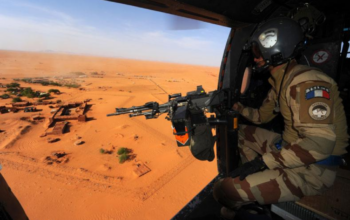
The FAMa reports ongoing ground and air operations to counter the offensive, including high-stakes escorts that have recently allowed hundreds of fuel tankers to reach Bamako. These efforts provide temporary relief to gas stations besieged by motorists, but the fragility of such gains is evident. Each convoy demands substantial military resources, and the prospect of long-term road security remains distant.
The armed forces face a dual challenge. In western and central Mali, Jnim intensifies ambushes and infrastructure sabotage. Meanwhile, in the north near Kidal, tensions simmer with the Permanent Strategic Framework rebel alliance, where fresh clashes appear imminent. Bamako’s leadership navigates this precarious landscape with dwindling resources, caught between competing threats.
Regional spillover: a crisis beyond Mali’s borders
The blockade’s impact extends far beyond Mali. Neighboring economies—Senegal, Mauritania, and Côte d’Ivoire—grow increasingly alarmed as trade corridors in West Africa falter. The slowdown strains ports in Dakar and Abidjan, which rely heavily on transit traffic to the Sahel hinterland. The Sahel States Confederation, comprising Mali, Burkina Faso, and Niger, struggles to forge a unified response to this jihadist-engineered economic warfare.
The Manantali attack also raises critical questions about shared OMVS infrastructure. Further damage could directly disrupt electricity supplies to Senegal and Mauritania, transforming Mali’s crisis into a regional emergency. External partners—whether development funders or military suppliers—must weigh their support for Bamako’s sovereignty against the imperative of protecting transboundary critical assets.
On the ground, the gap between the military’s operational claims and the stark reality of a capital under siege highlights the conflict’s evolving nature. Jnim is no longer content with territorial control; it seeks to asphyxiate the state itself. Renewed fighting is anticipated in the coming days, particularly around Kidal, where tensions remain dangerously elevated.