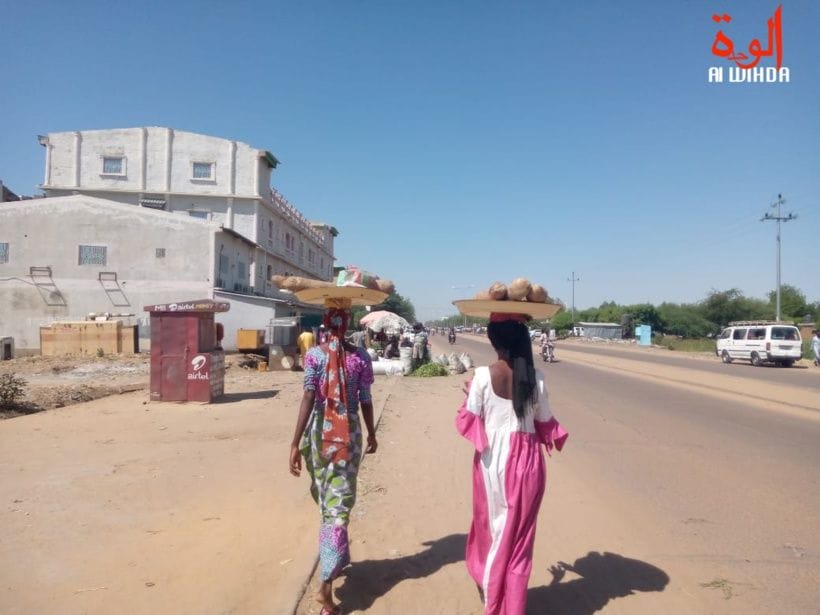
In the heart of Chad, women vendors are reshaping the urban landscape, their presence growing with each passing day. Laden with baskets overflowing with fresh fruit, sizzling snacks, and vibrant fabrics, they weave through crowded alleys, their voices cutting through the noise of traffic and commerce. The sun beats down on their brightly colored headscarves, but their determination burns brighter still.
In cities like N’Djamena, Moundou, and Abéché, the rise of these street vendors is impossible to ignore. Aïcha, a woman in her thirties, balances a tray of roasted peanuts on her head, her toddler strapped to her back. “It’s tough,” she admits, “but now, I call the shots.” Nearby, Fanta tends to her frying pan, her five-year-old son playing with a scrap of plastic in the dust. These women, once confined to household chores, now command the streets, negotiating prices, carrying goods, and carving out a fragile independence.
Yet, behind this visible progress lies a quieter struggle. The children who accompany them are often caught in the chaos—coughing in the smoke of makeshift stoves, dozing off under the weight of heavy loads, or begging for shade in the relentless heat. A local resident in Abéché recounts seeing a seven-year-old boy hauling a bucket of water, shouting for spare change while his mother haggled over a kilo of millet. Schoolbooks gather dust; the classroom is a distant memory for many of these children. Is this the hidden cost of women’s empowerment—a trade-off where mothers gain freedom, but their children lose their futures?
The streets of Chad tell a complex story. Women are rising, shouldering the weight of survival, but their children stumble in their wake. What lies ahead for these young ones in a world where the market’s demands eclipse their own dreams?