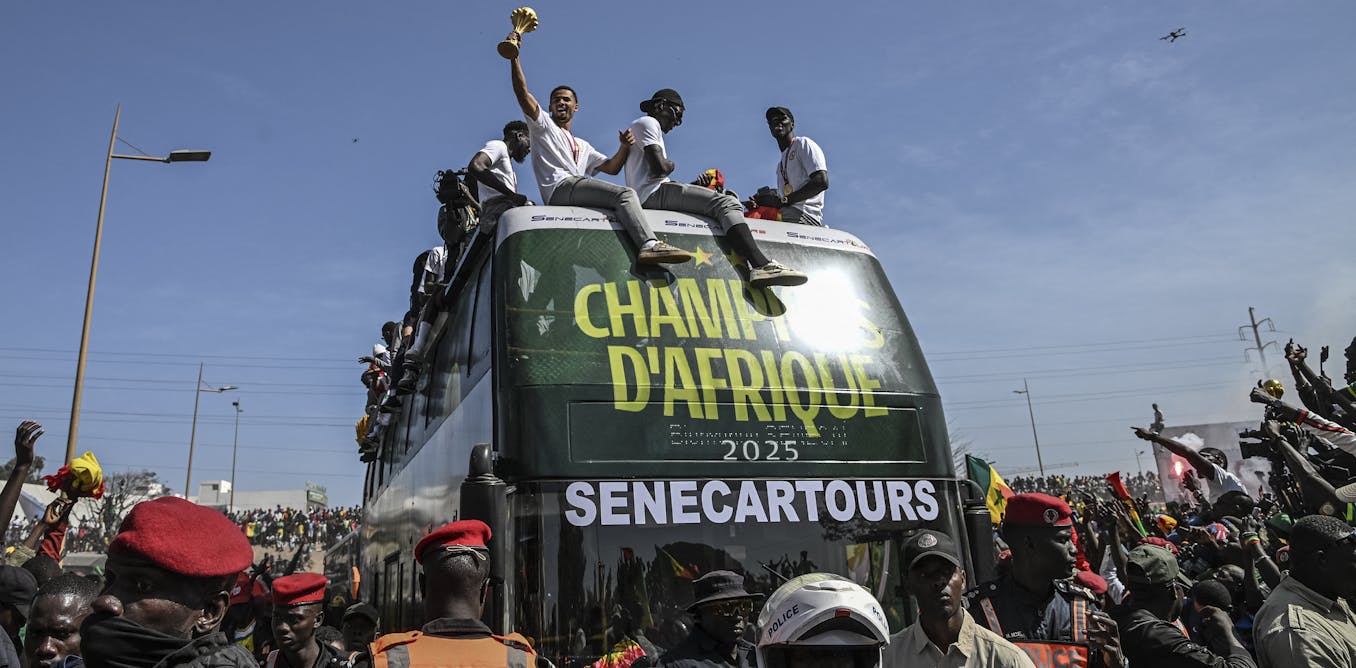
Two months following the CAN 2025 final, which concluded with a 1-0 victory for Sénégal on the pitch, the CAF Appeal Jury overturned the result. In a stunning reversal, the body awarded a 3-0 technical victory to Maroc. The justification provided was the Sénégalese team’s decision to exit the field for approximately ten minutes during the match.
This ruling, based on articles 82 and 84 of the tournament regulations, stands in direct opposition to the referee’s choice to resume and complete the game. This shift from a sporting result to a legal one raises significant questions. To understand the implications for West Africa Sahel sports governance, specialist Abdoulaye Sakho provides expert insight into this complex case.
The legal framework: Withdrawal versus abandonment
The CAF Appeal Jury based its decision on Chapter 35 of the CAN regulations, specifically targeting Articles 82 and 84, which govern team withdrawals. In its official statement, the jury declared the Sénégal national team forfeited the final of the TotalEnergies CAF Africa Cup of Nations Maroc 2025, effectively validating a 3-0 scoreline for the Fédération royale marocaine de football (FRMF).
The core of the issue lies in the legal classification of the events. While observers might describe it as a temporary interruption, the jury applied the specific definition of “withdrawal.” In sports law, such definitions are critical as they dictate the penalties. Much like a medical diagnosis determines the treatment, the legal label chosen here fundamentally altered the outcome of the tournament.
Why was the referee’s decision to finish the match ignored?
While the exact motivations of the Appeal Jury remain internal, it is clear they exercised their sovereign authority as an independent body. They chose to overlook a pivotal fact: the match actually reached its natural conclusion. This is significant for anyone following Sahel breaking news regarding regional sports integrity.
Under Law 5 of the International Football Association Board (IFAB), the referee holds discretionary power to pause, suspend, or terminate a match due to outside interference or rules violations. In this instance, the official opted for a temporary suspension rather than a definitive halt. By restarting the game, the referee acted as the ultimate authority on the field.
Legally speaking, referee decisions regarding match facts—including the final score—are typically considered final and must be respected by all parties. However, the CAF jury decided that the regulatory articles regarding team conduct superseded the referee’s immediate on-field management.
Historical context: Is this a first for African football?
Stripping a champion of their title months after the final whistle is virtually unheard of in continental history. Football governing bodies usually avoid altering results achieved on the grass. Rare exceptions exist, such as the 2018 World Cup qualifier between South Africa and Sénégal, which was replayed due to proven referee corruption.
Other notable disruptions include the 2019 Champions League final between Wydad and Espérance de Tunis. In that case, the Moroccan side refused to continue after a VAR failure. However, a key distinction exists: in 2019, the match never resumed, leading to a forfeit. In the CAN 2025 case, Sénégal returned to the pitch and played until the end, making this a unique precedent in Sahel politics today and sports jurisprudence.
What are the chances for Sénégal’s appeal?
The Fédération Sénégalaise de Football (FSF) has already initiated an appeal process. When a final decision is reached by a continental body like CAF, the case can be brought before the Court of Arbitration for Sport (CAS) in Switzerland. This process involves a formal declaration of appeal, the exchange of legal memorandums, and oral arguments.
Reports suggest that the FSF has also requested a stay of execution. If granted, Sénégal would technically retain its status as champion until the CAS delivers a final verdict, which could take several months. This case remains a landmark for sports law, touching on refereeing powers, the ethics of legal procedures, and the overall governance of sports organizations across West Africa Sahel.