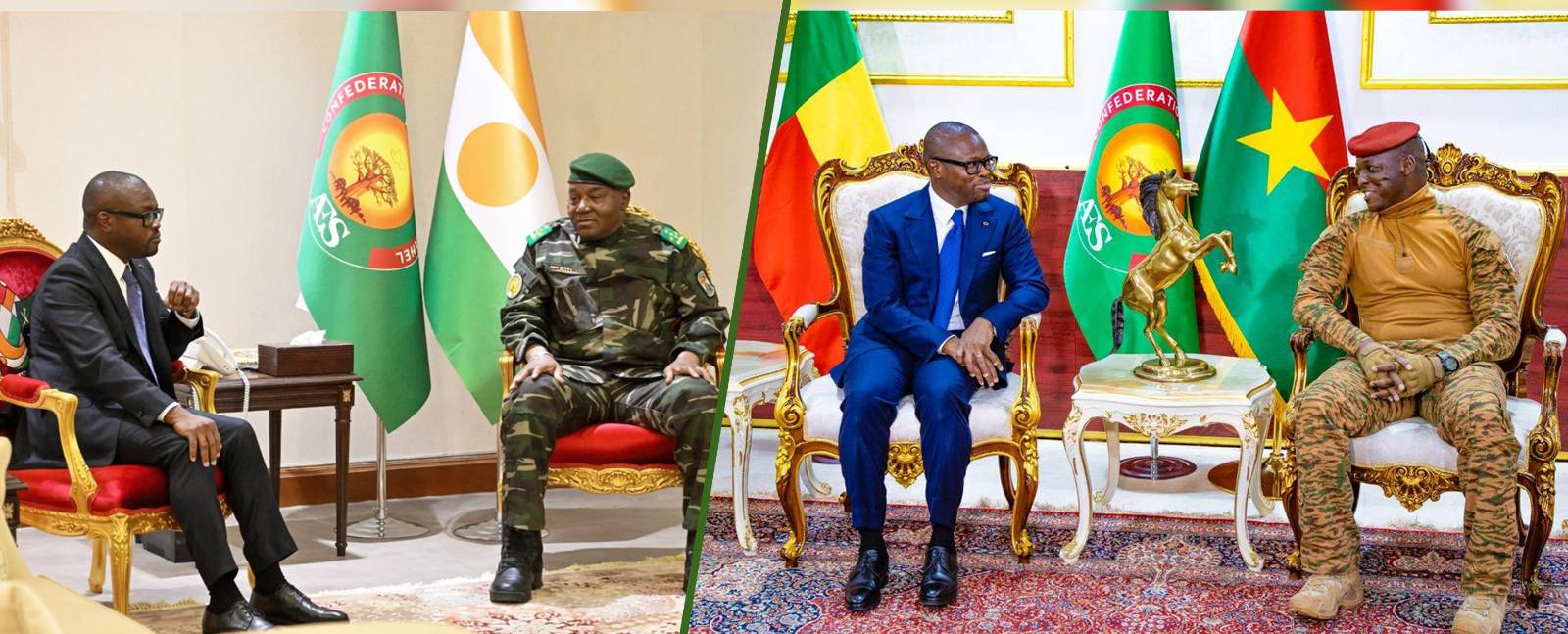
The recent official visits by Benin’s President Romuald Wadagni to Abuja (Nigeria), Niamey (Niger) and Ouagadougou (Burkina Faso) signal the start of a broader effort to restore and strengthen cross-border relations in West Africa. This renewed diplomatic engagement is driven by a mix of economic necessity and security imperatives, reflecting a shared recognition among regional leaders of the need to rebuild trust and cooperation.
Following a period of strained ties linked to political transitions in the Sahel and evolving regional policies, Benin has taken the initiative to reopen direct diplomatic channels with its key neighbors. The focus is on addressing interconnected challenges that no single nation can tackle alone.
Strengthening trade routes and economic resilience
Economic interdependence among Benin, Niger and Burkina Faso forms the backbone of this renewed cooperation. For landlocked Niger and Burkina Faso, access to global markets and the smooth flow of essential goods depend heavily on the port infrastructure and road networks of coastal nations, with Benin’s Cotonou-Niamey corridor and routes to Ouagadougou playing a pivotal role.
Conversely, Benin’s economic vitality—particularly the activity at the Port of Cotonou and the efficiency of its logistics sector—relies significantly on the transit of goods to and from Sahelian markets. This mutual reliance extends to the energy sector, where the pipeline connecting Niger’s Agadem oil fields to Benin’s Sèmè-Kpodji terminal links the two economies: Niger depends on Benin’s infrastructure to export its crude, while Benin benefits from transit revenues. The recent agreement to establish a 15-day expert committee to identify and remove barriers to free movement underscores the urgency of safeguarding these shared economic lifelines.
Uniting against cross-border threats
The security landscape in the Sahel remains fragile, with armed groups and transnational crime posing persistent risks. The shared border zones, including the strategic and vulnerable W Park area, demand coordinated action. By engaging directly with Burkina Faso and Niger, Benin is prioritizing a regional approach to security—one that fosters intelligence sharing, clarifies military dynamics and revives joint operations such as coordinated patrols and information exchanges. This strategy is essential not only for national security but also for protecting the broader Sahel region.
Balancing regional alliances and sovereignty
The timing of these diplomatic efforts is deliberate. The initial visit to Nigeria—an ECOWAS hub—followed by working trips to Niger and Burkina Faso, reflects a broader strategy to maintain functional communication channels with Sahel countries while respecting regional commitments. In a shifting West African geopolitical landscape, the preservation of these direct bilateral negotiation channels is seen as a critical tool for reducing geopolitical risk, enabling the resumption of trade flows and ensuring the safety of local communities.
The renewed focus on diplomacy is rooted in pragmatic assessments of geography, collective border security and the performance of shared economic infrastructure. Ultimately, this normalization effort is less about political alignment and more about recognizing the technical realities of regional interdependence—a balance between sovereignty and operational necessity.