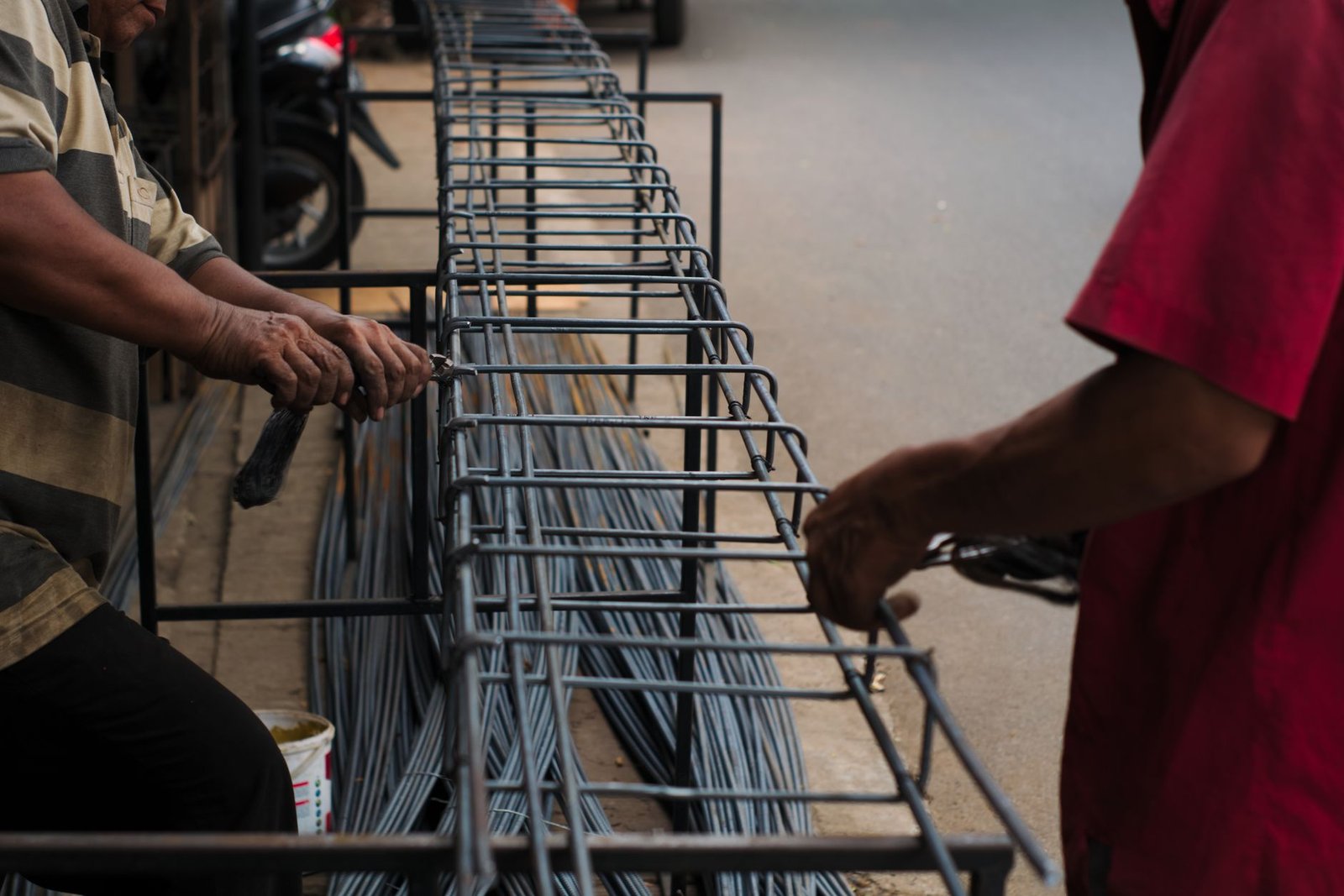
Locally manufactured rebar is poised to become a cornerstone of Gabon’s evolving industrial strategy. On July 1st, in Nkok, Minister of Industry and Local Transformation, Lubin Ntoutoume, officially initiated the construction phase for the upcoming Prometal Gabon factory. This significant undertaking represents a strategic partnership between the Gabonese state and the Prometal group, backed by an investment of 38 billion FCFA. The construction, projected to span twenty-four months, is situated within the Special Investment Zone (ZIS), specifically designed to attract transformative industries. Upon completion, the facility aims to achieve an annual production capacity of 60,000 tonnes of rebar.
This announcement aligns with Libreville’s current policy drive, which increasingly signals a strong commitment to import substitution. Gabon presently relies heavily on imported steel products, despite its abundant yet largely underexploited mineral resources. By fostering domestic industrial capacity, authorities seek to curb foreign currency outflows and fortify a manufacturing sector that has historically focused on exporting raw materials.
Nkok: a hub for local processing and industrial growth
The Nkok Special Investment Zone (ZIS), operational for over a decade, stands as a prime example of the diversification policies championed by successive Gabonese governments. As a free zone benefiting from preferential tax and customs regimes, it already hosts key players in timber, light metallurgy, and logistics. The integration of a steel plant dedicated to rebar production further strengthens this still-developing ecosystem, which is beginning to generate integrated value chains, particularly within the construction and public works sectors.
The selection of the Nkok site is strategically deliberate. Nkok boasts crucial connectivity to the Transgabonais railway network and convenient access to the Owendo port. These two advantages are vital for the efficient distribution of heavy industrial output. For Prometal Gabon, logistics represent a structural cost component; producing competitive rebar necessitates securing both raw material inputs and effective distribution channels to major construction sites in Libreville, Port-Gentil, and Franceville.
Job creation and economic ripple effects anticipated
The social dimension of this project commands considerable attention. The projected creation of 1,350 jobs, encompassing both direct and indirect roles, signifies a substantial boost in a nation where youth unemployment remains a pressing concern. Beyond the positions directly within the industrial complex, the factory is expected to stimulate a network of local service providers, including construction subcontractors during the building phase, transporters, maintenance specialists, and technical service suppliers once production commences.
Nevertheless, the promise of skilled employment raises questions about Gabon’s existing training infrastructure. The steel industry demands specialized competencies in metallurgy, plant operations, and industrial maintenance – fields not extensively covered in national technical curricula. The operator will likely need to combine local recruitment with knowledge transfer initiatives, a critical aspect closely monitored by authorities within the framework of the public-private dialogue accompanying the plant’s establishment.
Regional industrial ambitions for Gabon’s rebar sector
With an annual output of 60,000 tonnes, Prometal Gabon’s ambitions extend beyond the domestic market. Gabonese demand for rebar, driven by infrastructure programs and urban housing, remains below this projected capacity. The potential surplus naturally creates opportunities for regional exports, particularly to Equatorial Guinea, Congo, and southern Cameroon, where demand for construction materials remains high and market competition is still fragmented.
This sub-regional aspiration unfolds within a context where the Economic and Monetary Community of Central Africa (CEMAC) has struggled to foster integrated industrial champions. By establishing a steel plant on its territory, Gabon aims to capture added value that previously benefited Asian and European importers. The announced twenty-four-month timeline for commissioning will serve as a test of credibility for the entire Nkok framework, which has sometimes faced criticism for project delays.
Ultimately, the successful realization of this venture will hinge on the stability of the macroeconomic environment and the fluidity of relations between Prometal and the state as a shareholder. Past experiences with steel projects in the sub-region underscore the necessity of rigorous governance and long-term clarity regarding energy tariffs and land tenure. The groundbreaking ceremony was presided over by Minister Lubin Ntoutoume.