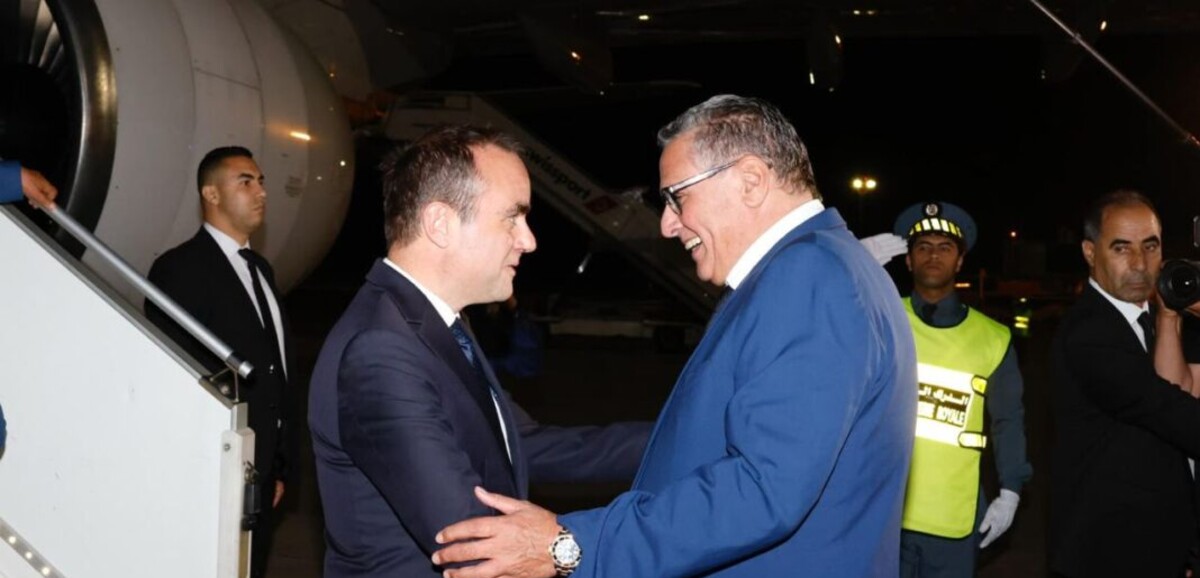
On a mild Wednesday evening, French Prime Minister Sébastien Lecornu landed in Rabat for a two-day state visit aimed at deepening the already strong bonds between France and Morocco. The high-profile delegation, which included twelve cabinet ministers, underscores the significance Paris attaches to this North African partnership.
Reigniting a strategic alliance
The timing of this trip is far from coincidental. Diplomatic ties between the two nations have been steadily improving since 2024, when France formally recognized Morocco’s sovereignty over the Western Sahara. This visit marks the first high-level meeting since the resumption of the Franco-Moroccan High-Level Consultation, a dialogue mechanism that had been dormant since 2019. Welcoming his counterpart Aziz Akhannouch, Mr. Lecornu engaged in bilateral talks before co-chairing the landmark gathering.
Key agreements on the horizon
Expectations are high for the signing of approximately fifteen agreements spanning multiple critical sectors:
- Civil aviation: Enhanced cooperation in air transport regulations and capacity building;
- Infrastructure: Joint ventures in road, rail, and port development;
- Energy: Expansion of electrical interconnections and renewable energy projects;
- Water management: Shared expertise in drought mitigation and desalination technologies;
- Defence: Strengthened military cooperation and intelligence sharing;
- Culture: A landmark partnership between the Institut du Monde Arabe in Paris and Morocco’s Ministry of Culture.
These initiatives are expected to pave the way for a future state visit by King Mohammed VI to France, an engagement already confirmed by both sides.
Morocco as France’s premier Maghreb partner
This diplomatic offensive highlights Paris’s strategic pivot toward Rabat as its most reliable ally in the Maghreb region. With Algeria’s relations still strained despite recent thawing efforts, France is increasingly turning to Morocco to address shared security concerns, particularly in the volatile Sahel region. The visit sends a clear signal of mutual trust and long-term commitment.