The Democratic Republic of Congo (DRC) is making waves at the United Nations this month, with a bold diplomatic offensive aimed at reshaping global conversations around natural resource governance. As the temporary president of the UN Security Council for July, Kinshasa is leveraging its platform to spotlight what it calls a critical gap in international policy: the nexus between resource exploitation and lasting peace.
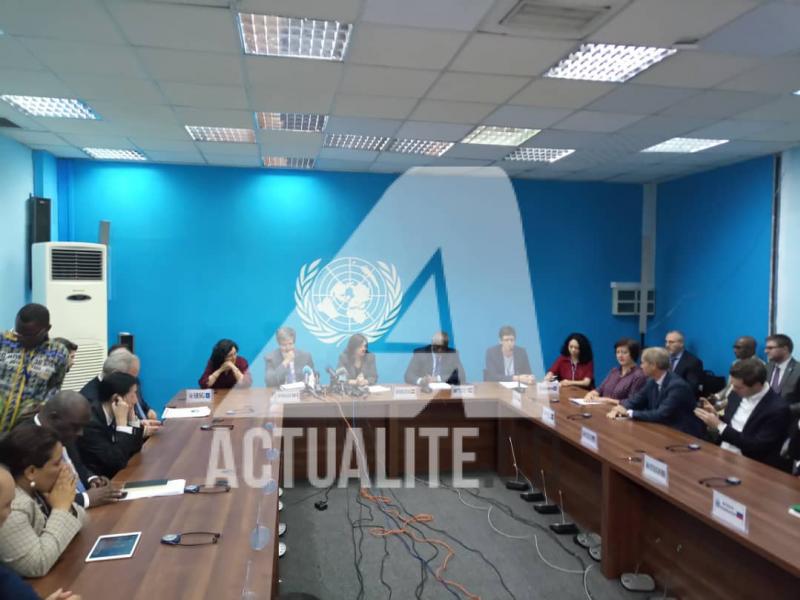
On Monday, July 13, the DRC hosted a high-profile Arria-formula meeting in New York, convening global stakeholders to examine how conflict and peace are shaped by the extraction and trade of natural wealth. This diplomatic push will culminate on July 22 with a landmark high-level debate, chaired by President Félix Tshisekedi, under the theme: “Natural Resource Governance: The Cornerstone of Peace, Security, and Prosperity.”
Kinshasa’s Call for a New International Framework
In a bold policy shift, the DRC is urging the UN to move beyond fragmented approaches to resource governance. Current systems—including mineral traceability, corporate due diligence, and conflict financing prevention—are deemed insufficiently coordinated. According to Congolese officials, these measures fail to address the core issue: how natural resources fuel violence and undermine development.
The DRC is advocating for a unified international framework that integrates resource governance with conflict prevention and security. Foreign Minister Thérèse Kayikwamba Wagner emphasized that resources should no longer be viewed solely through an economic lens but as strategic pillars of peace and security, deserving a central place on the UN Security Council’s agenda.
France Pledges Full Support for DRC’s Vision
In a significant show of diplomatic alignment, France’s Permanent Representative to the UN, Ambassador Jérôme Bonnafont, publicly endorsed Kinshasa’s initiative. Speaking to the Council, he underscored France’s commitment to strengthening international norms around responsible resource extraction.
“Natural resources must be a lever for sustainable and equitable development, benefiting the communities and nations that harbor them. They must be shielded from exploitation by predatory actors and diverted from malicious use. We fully support the DRC’s goal to enhance coherence in international efforts aimed at ensuring these resources are used for good. France stands ready to contribute to the Council’s work in preparation for next week’s high-level debate.”
A Diplomatic Push Amid Fragile Realities
This diplomatic momentum comes at a time of heightened regional tensions. While the DRC has secured strategic partnerships—including a U.S.-DRC accord on critical minerals and a Washington-mediated agreement with Rwanda to de-escalate tensions and withdraw foreign forces—security on the ground remains volatile.
The AFC/M23 rebel group, which Kinshasa and multiple international actors accuse of receiving Rwandan support, continues to control key cities such as Goma and Bukavu, as well as vast areas of North and South Kivu. Despite diplomatic efforts, including the stalled Doha process brokered by Qatar, violence persists in eastern DRC, underscoring a persistent gap between diplomatic progress and ground-level realities.
The DRC’s presidency of the UN Security Council, marked by a focus on resource governance and human security, signals a deliberate attempt to redefine international priorities. As Kinshasa prepares for July 22’s landmark debate, the world watches to see whether this bold diplomatic push can translate into tangible change for a nation grappling with conflict, corruption, and the paradox of vast natural wealth amid widespread poverty.