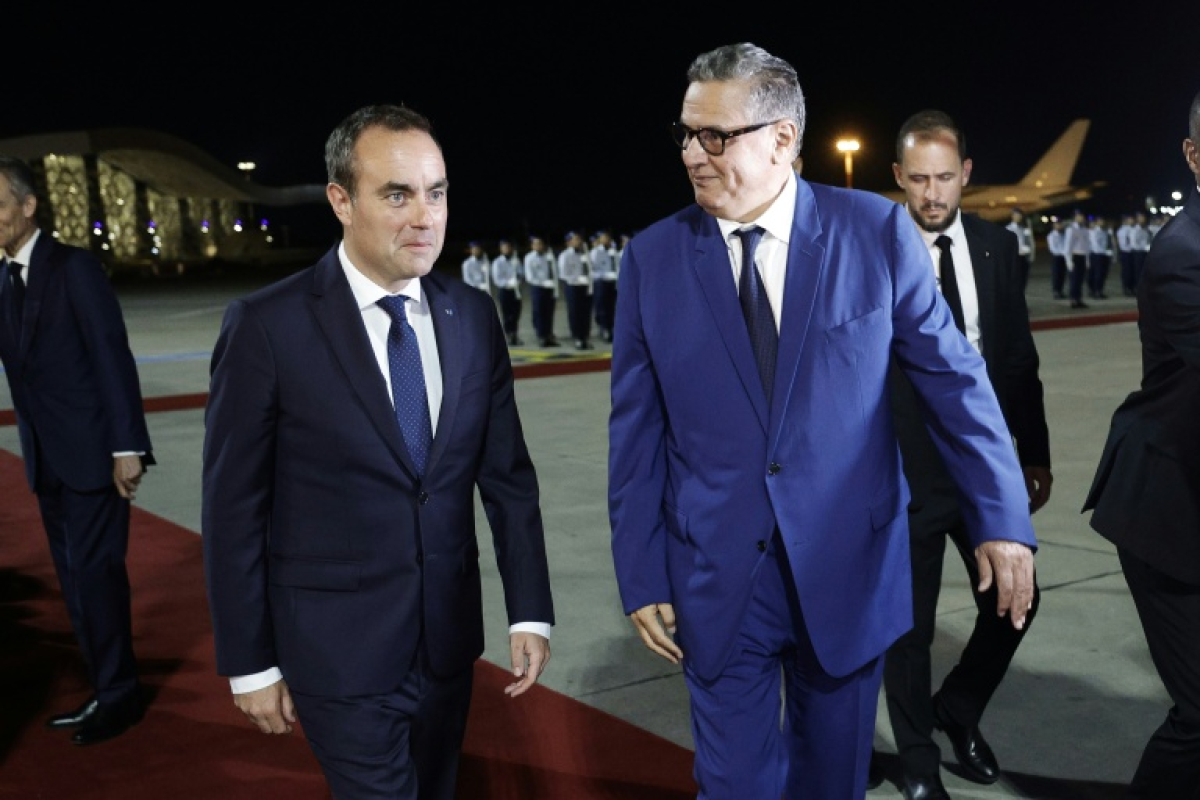
French Prime Minister Sébastien Lecornu’s official visit to Rabat this week marks a pivotal moment in Franco-Moroccan relations, as both nations seek to elevate their alliance to new heights. The two-day program, which began with a ceremonial welcome at Rabat-Salé Airport, underscores the growing convergence of interests between Paris and Rabat.
During his trip, Lecornu emphasized the need to “scale up” cooperation, particularly in security and counterterrorism, while reigniting a partnership first championed by President Emmanuel Macron and King Mohammed VI. The French leader’s visit follows Macron’s historic 2024 recognition of Morocco’s sovereignty over the disputed Western Sahara territory—a move that strained relations with Algeria but paved the way for renewed diplomatic engagement.
Strengthening ties after years of tension
After a three-year period marked by visa disputes and espionage allegations, Macron’s 2024 state visit to Morocco signaled a thaw in relations. The trip culminated in the signing of an exceptional “enhanced partnership” and a series of lucrative contracts. Thursday’s meetings between Lecornu and Moroccan Prime Minister Aziz Akhannouch aimed to solidify this momentum, with discussions centered on mutual security concerns in the Sahel region.
Accompanied by twelve ministers, including Foreign Affairs chief Jean-Noël Barrot and Interior Minister Laurent Nunez, Lecornu’s delegation underscored France’s commitment to deepening ties with Morocco. The visit also included a solemn tribute at the Mausoleum of King Mohammed V and Hassan II, followed by high-level talks on economic, migration, and defense cooperation.
Navigating espionage allegations and future ambitions
The visit unfolded against a backdrop of renewed scrutiny over Morocco’s alleged use of the Pegasus spyware, a controversy first exposed in 2021. Reports from an international media consortium claimed Moroccan intelligence had targeted French officials, including President Macron and Lecornu (then a minister). Rabat has consistently denied the allegations as “false and baseless.”
French and Moroccan officials declined to comment on the latest revelations, with Paris framing the visit as an opportunity to reinforce trust and cooperation. “Our goal is to strengthen the framework of collaboration with Morocco,” a French presidential aide stated.
King Mohammed VI, in a message relayed by Morocco’s official press agency, praised the “consolidation” of the two nations’ “privileged relationship.” The possibility of a royal visit to France and the signing of an unprecedented “friendship treaty” were also floated, though no timeline has been set.
Sahel security and Morocco’s new role in Europe
Lecornu highlighted shared strategic interests in Africa, particularly in combating jihadist threats across the Sahel. France, facing limited intelligence cooperation from Algeria, is increasingly turning to Morocco as a key partner. The two countries are set to sign fifteen agreements covering economic, security, migration, and defense sectors. Notable projects include a proposed Rabat regional express rail network and potential defense collaborations in armaments.
Morocco’s ascendancy in French diplomacy comes as Paris abandons its long-standing efforts to balance relations between Rabat and Algiers. The shift reflects a pragmatic approach to regional stability, with Morocco now viewed as a critical ally in counterterrorism and economic initiatives.