
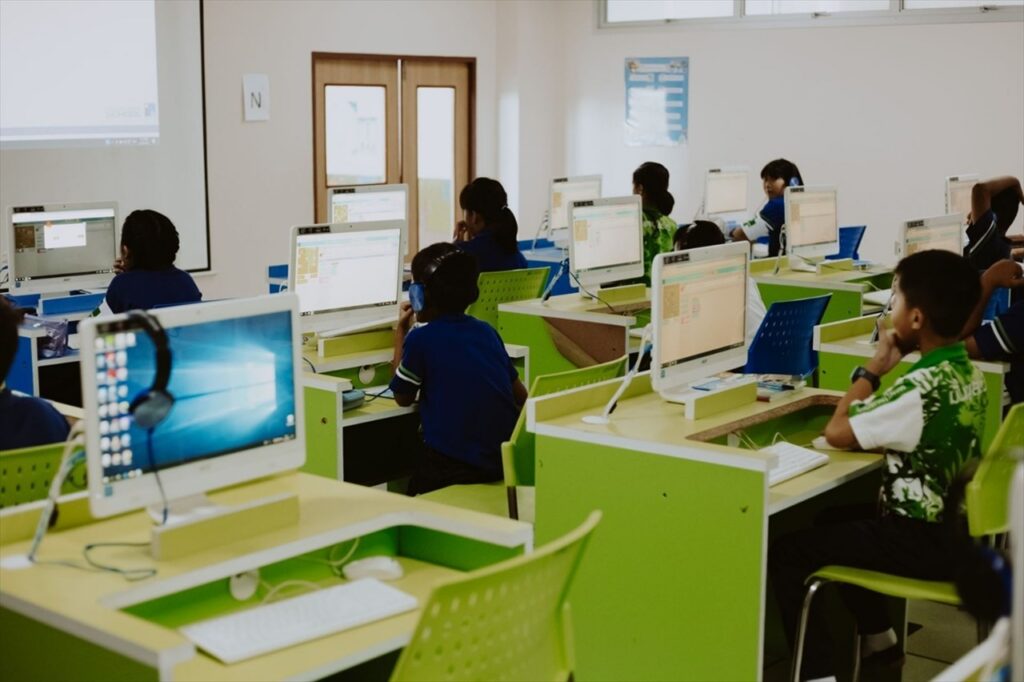

West African leader advances in digital transformation
The Côte d’Ivoire has marked a significant milestone in its digital evolution, as revealed by the 2026 edition of the International Telecommunication Union’s ICT Development Index (IDI). The country’s score improved from 69.5 points in 2025 to 72 points in 2026—a 4% increase that underscores its rapid progress in digital infrastructure and market adoption.
This achievement aligns perfectly with the Côte d’Ivoire’s strategic vision, as outlined in both the National Development Plan (NDP) and the National Digital Development Strategy. These frameworks prioritize digitalization of the economy and modernization of telecom infrastructure as key drivers of sustainable growth.
How the Côte d’Ivoire outperforms African averages
With a score of 72 points, the Côte d’Ivoire now ranks 15th among African nations, surpassing the continental average of 59 points by a substantial margin. This progress is rooted in two core evaluation pillars established by the ITU:
- Universal connectivity: Measures foundational digital adoption, including household internet access, individual internet usage, and active mobile broadband subscriptions per 100 inhabitants. The Côte d’Ivoire scored 64.9 points here—well above Africa’s average of 38.1 points.
- Meaningful connectivity: Evaluates operational factors like mobile network coverage, fixed and mobile data traffic per subscription, device ownership, and financial accessibility of services. The country achieved 79 points in this category, outperforming the regional average of 65 points.
The Côte d’Ivoire’s strong performance in meaningful connectivity is particularly noteworthy. Mobile broadband networks (3G and 4G/LTE) now cover 98% and 90% of the population, respectively. Additionally, data and voice tariffs remain highly affordable, representing just 1.8% of the national gross income per capita—translating to a financial accessibility index of 95.8 out of 100 for mobile services. Fixed broadband plans are similarly cost-effective, priced at 4.8% of gross income per capita, yielding an accessibility index of 87.
Market penetration and consumer trends
Consumer engagement in the digital space is also on the rise:
- 73.1% of individuals now own a mobile phone.
- 70.8% actively use the internet.
- 58.7% of households have home internet access.
- Active mobile broadband subscriptions have reached 84.1 per 100 inhabitants.
While these figures reflect strong foundational growth, there remains untapped potential in advanced digital consumption. For instance, average mobile data usage stands at 32.7 gigabytes per subscription, yielding a traffic score of 51.5 points. Similarly, fixed broadband traffic averages 893.9 gigabytes per subscription, resulting in a normalized score of 73.7 points. These gaps highlight opportunities for deeper engagement with high-bandwidth applications and services.
Regional digital landscape: Côte d’Ivoire holds strong position
The Côte d’Ivoire’s progress places it among Africa’s digital leaders. While the Morocco (89.2 points) leads the continent, followed closely by Mauritius (89.1 points) and Algeria (87.8 points), the Côte d’Ivoire’s 72 points position it ahead of several peers, including Ghana (75.6 points), Senegal (72.8 points), and Namibia (72.2 points). It ranks just behind Gabon (76.2 points) and shares the 15th spot with Namibia in the continental ranking.
You may also like
-
BOAD backs Niger’s infrastructure with $105m loan amid governance challenges
-
Bénin: customs crack down on explosives trafficking in bold security move
-
African Giants Dominate Continent’s Economy, Leaving Morocco Behind
-
Africa’s economic powerhouses: five nations drive 60% of continent’s gdp
-
Côte d’Ivoire climbs in global digital economy ranking with 4% rise