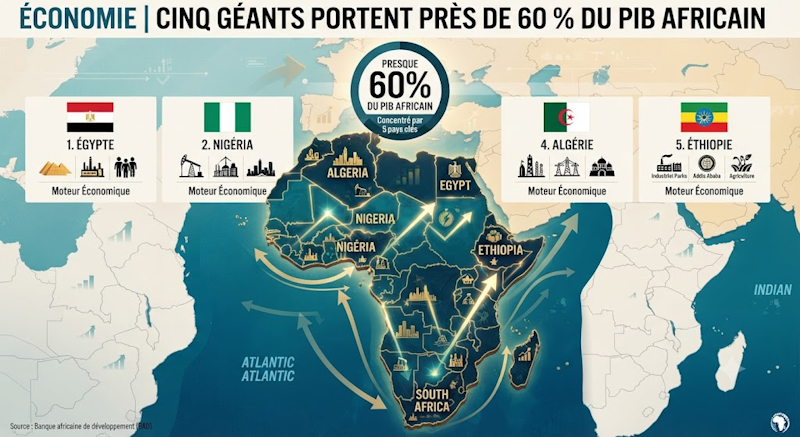
Fresh data from the African Development Bank reveals that just five countries contribute nearly 60% of Africa’s Gross Domestic Product (GDP). These economic heavyweights—Egypt, Nigeria, South Africa, Algeria, and Ethiopia—continue to shape the continent’s economic trajectory.
The dominance of these nations underscores their pivotal role in Africa’s growth story. With vast natural resources, massive domestic markets, robust industrial sectors, and heavy infrastructure investments, these countries form the backbone of continental development.
What makes these economies stand out?
Egypt and Nigeria lead in population size and economic diversification, steadily reducing reliance on single sectors. South Africa remains the continent’s industrial and financial powerhouse, while Algeria leverages its energy wealth and strategic public investments to fuel growth. Meanwhile, Ethiopia is rapidly industrializing, backed by large-scale infrastructure projects.
The uneven landscape of African economies
While these five nations propel Africa’s economy forward, the disparity is stark. Many countries struggle with industrialization gaps, limited economic diversification, financial access challenges, and job creation deficits. This imbalance highlights the urgent need for policies that spread growth more evenly across the continent.
The road ahead: balancing growth for all
Economists emphasize that fostering inclusive growth is critical. The goal? Ensuring smaller economies aren’t left behind as these regional giants surge ahead. Balanced development could unlock opportunities across Africa, turning today’s disparities into tomorrow’s shared prosperity.
You may also like
Sevilla vs Barcelona: kick-off time, tv channel and odds for the Sánchez-Pizjuán clash
Mali prison overcrowding: Bamako jail holds 10,000 in space built for 600 as mass arrests surge
World Bank brings education, jobs and entrepreneurship open days to Abidjan on 21-22 September 2026
At Tougan, Burkina Faso’s maize farmers sell at a loss and face debts as food sovereignty falters
Niger’s FPL opens its ranks to youth as security crisis deepens