culture & education
UNESCO joins forces with Cameroon to champion mother tongue education
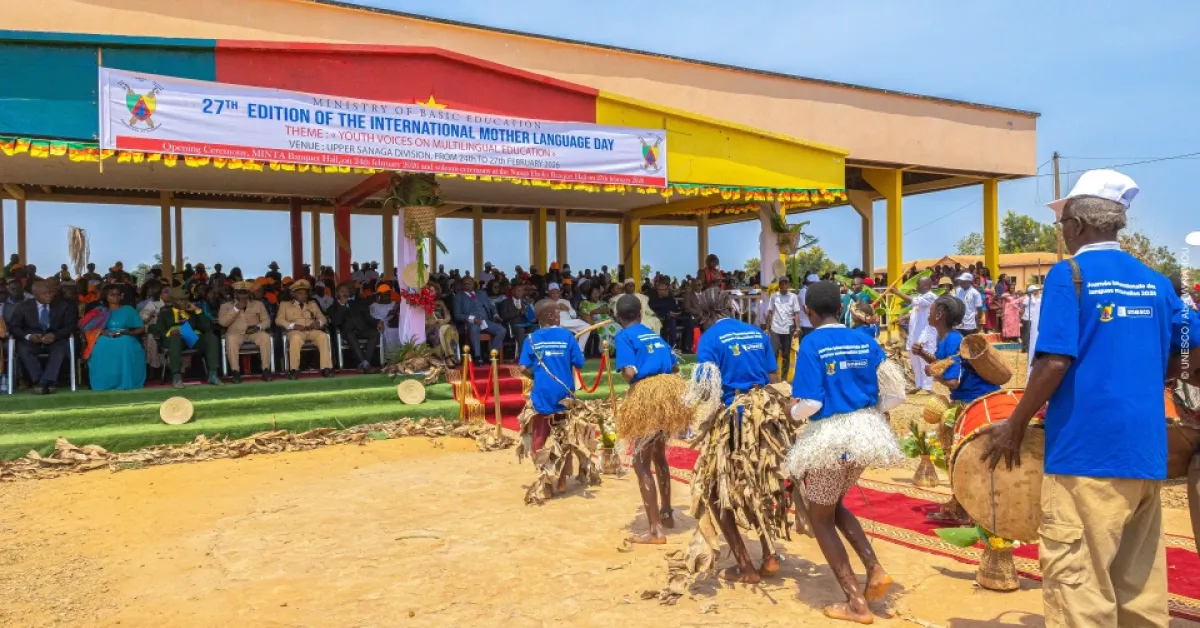
The United Nations Educational, Scientific and Cultural Organization (UNESCO) participated in the closing ceremony of the 2026 International Mother Language Day celebrations held on February 27 in Nanga Eboko, following a week of nationwide events across Cameroon aimed at fostering linguistic diversity and multilingual education.
The 27th edition of this global observance, themed “youth voices on multilingual education”, highlighted the pivotal role young learners play in preserving and advancing mother tongue education. Mother languages were recognized as vital tools for effective learning and safeguarding cultural heritage across generations.
The ceremony in Nanga Eboko was led by Cameroon’s Minister of Basic Education, Professor Laurent Serge Etoundi Ngoa, alongside regional partners including UNESCO’s Central Africa Office Director, Mr. Hilaire Mputu. Mr. Mputu reaffirmed the organization’s dedication to promoting multilingual education systems that prioritize mother tongue instruction, particularly during early childhood education.
UNESCO advocates for mother tongue-based learning as a proven strategy to enhance educational quality and student success. Through targeted programs and partnerships with member states, the organization works to preserve linguistic and cultural diversity, recognizing it as a cornerstone of sustainable development and intercultural dialogue. The International Mother Language Day, observed annually on February 21, serves as a global platform to advocate for the critical role of mother languages in education, knowledge transmission, and social cohesion.
The event featured vibrant performances by primary school students, showcasing the linguistic and cultural richness of Cameroon’s diverse regions. Through its active involvement, UNESCO underscored its commitment to empowering member states in advancing multilingual education and protecting linguistic heritage. This aligns with the core objectives of International Mother Language Day, which promotes mother tongue learning as essential for knowledge preservation, cultural memory, and social unity.