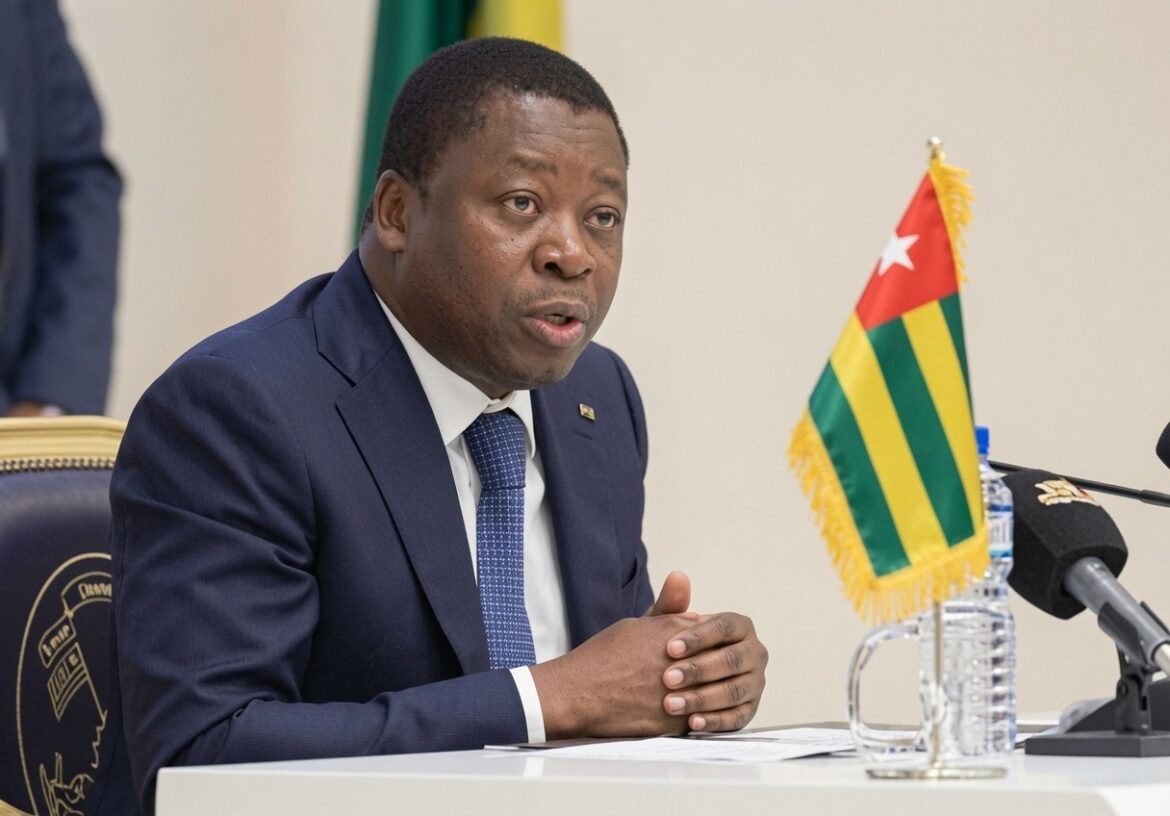
From October 9 to 16, 2026, the president of Togo’s Council is carrying out an official visit to China. Presented as a new stage in strengthening bilateral relations, this trip raises an essential question: beyond handshakes and diplomatic agreements, what concrete benefits can the Togolese people hope for?
Faure Gnassingbé lands in China from October 9 to 16, 2026, with the stated ambition of consolidating a long-standing strategic partnership between Lomé and Beijing. The agenda includes meetings with Chinese leaders, economic exchanges, visits to industrial sites, and exploration of new avenues for cooperation. On paper, the trip has all the hallmarks of a diplomatic offensive aimed at attracting investment and accelerating Togo’s development.
But behind declarations of goodwill and promises of cooperation, a question deserves to be asked: how much longer will Togolese citizens have to wait to see the benefits of these partnerships translate into their daily lives?
For while diplomacy is an important instrument of economic policy, it cannot be an end in itself. Official trips can open doors, facilitate negotiations, and encourage investment. However, they guarantee neither job creation, nor improved purchasing power, nor more equitable access to public services.
Beijing, a key partner — but delivering what results?
Relations between Togo and China date back to 1972. Over the decades, the two countries have developed political and economic ties that were strengthened when their cooperation was elevated to a comprehensive strategic partnership in September 2024.
For Lomé, Beijing represents a heavyweight partner, particularly in infrastructure, trade, and technology. For China, Togo is a potential gateway to West African markets, notably thanks to the country’s geographical position and the logistical capacity of the autonomous port of Lomé.
However, intensified trade alone is not enough to prove that the Togolese economy is fully benefiting. A dynamic commercial relationship must also be assessed through the country’s ability to export more, develop its industry, process its raw materials, and create sustainable jobs.
Therefore, Faure Gnassingbé’s visit should not be judged solely on its protocol or the caliber of the people he meets. It should above all be assessed on the nature of the commitments obtained, their funding, their implementation timeline, and their expected effects on citizens’ living conditions.
Investment promises put to the test of daily life
Agriculture, energy, infrastructure, industrialization, and technology transfer are among the sectors likely to benefit from this cooperation. These are all strategic areas for a country seeking to strengthen its productive fabric and expand job opportunities for its youth.
But investment announcements often carry a symbolic weight that exceeds their immediate reach. Between the signing of a memorandum, the actual mobilization of funding, and the commissioning of a project, delays can be long. And when commitments remain vague, it becomes difficult for citizens to measure progress.
The head of Togo’s government is therefore expected on much more demanding ground than that of diplomatic representation. Togolese people need to know which projects will actually be carried out, how many jobs they will create, what role will be reserved for local businesses, and what guarantees will accompany the funding mobilized.
The question of skills transfer also deserves particular attention. Truly beneficial cooperation should not be limited to importing equipment or awarding contracts to foreign companies. It should help train Togolese workers, strengthen the capacity of national businesses, and make the economy less dependent on imports.
The political record in the background
This visit comes as Faure Gnassingbé remains at the center of Togolese political life, after more than two decades at the helm of the state and the establishment, in 2025, of the Fifth Republic, in which he serves as president of the Council.
This political longevity inevitably gives a particular dimension to his international trips. After so many years of governance, the challenge is no longer just to forge partnerships or multiply diplomatic initiatives. It is also to demonstrate that these relations contribute to measurable and lasting improvements in the country.
International cooperation alone cannot address all of Togo’s economic and social difficulties. Results also depend on budget choices, the quality of institutions, transparency in project management, and the authorities’ ability to account for their decisions.
That is why this visit would benefit from being accompanied by precise information on the commitments made and the monitoring mechanisms planned. Without transparency on the agreements concluded, the costs incurred, and the expected results, the risk is that diplomatic communication takes up more space than the evaluation of public policies.
A visit that will have to prove itself
From October 9 to 16, Faure Gnassingbé will seek to strengthen ties between Lomé and Beijing. The approach can offer opportunities for Togo, provided that national interests are clearly defined and the projects negotiated meet the country’s real needs.
But for citizens, the essential issues are not played out in Chinese diplomatic salons. They are measured in job opportunities, household incomes, access to electricity, the quality of infrastructure, and the prospects offered to young people.
At the end of this trip, one question will therefore remain open: will Faure Gnassingbé’s visit to China mark a new stage in Togo’s economic transformation, or will it be added to the long list of diplomatic initiatives whose concrete benefits remain to be demonstrated?
It is by results, and not declarations alone, that Togolese people will be able to assess the real significance of this visit.