
Cameroon’s Minister of State for Religious Affairs, Paul Atanga Nji, stands at the intersection of faith and governance, a role that blends spiritual leadership with national policy. His appointment reflects the country’s commitment to integrating religious values into public administration while maintaining diplomatic presence on the global stage.
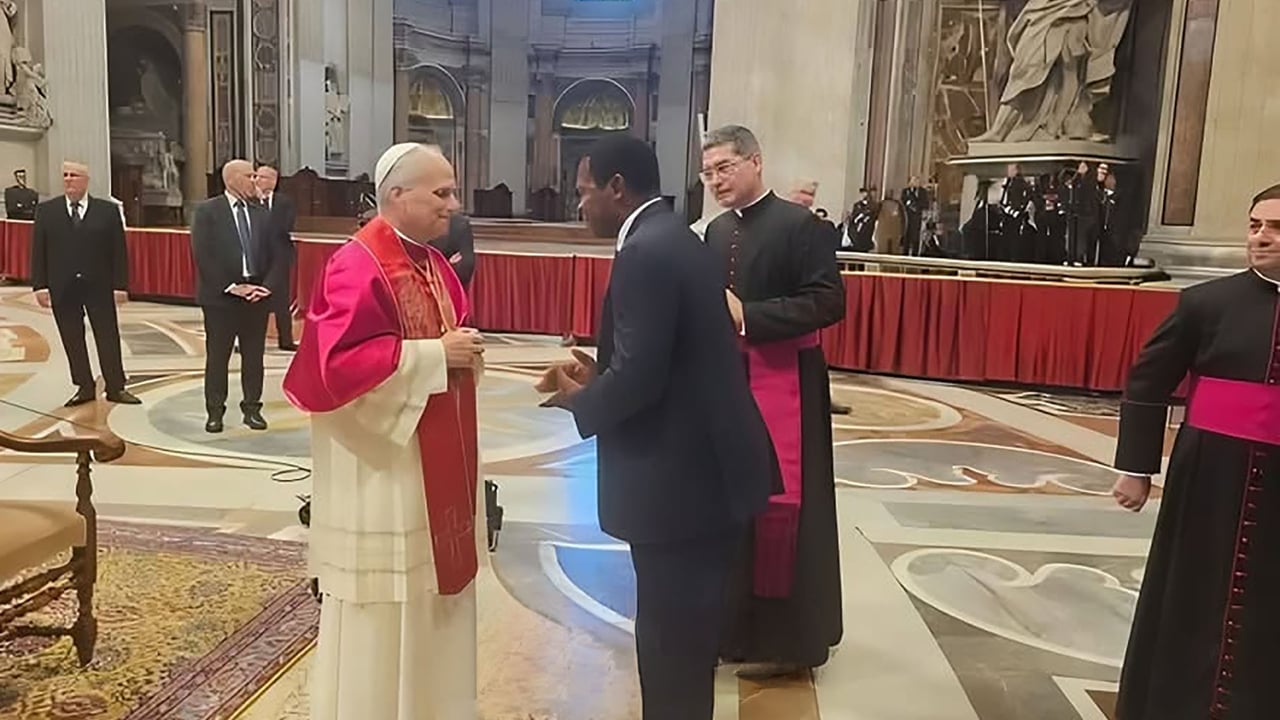
Attending the Vatican’s inaugural mass for Pope Léon XIV in May 2025, Nji represented Cameroon with a delegation that underscored the nation’s deep Catholic roots. The event highlighted not only the spiritual significance but also the diplomatic ties between Cameroon and the Holy See, reinforcing the country’s role in international religious dialogue.
a dual mandate: faith and governance
As Minister of State for Religious Affairs, Nji oversees policies that bridge the gap between Cameroon’s diverse faith communities and state institutions. His portfolio includes managing relations with religious leaders, promoting interfaith harmony, and ensuring that spiritual values inform national development strategies. This dual role positions him as a key figure in shaping Cameroon’s social and cultural landscape.
The minister’s approach combines traditional diplomacy with a modern understanding of religion’s role in governance. By fostering collaboration between faith-based organizations and government agencies, he aims to create policies that reflect the moral and ethical concerns of Cameroon’s citizens.
diplomatic presence on the global stage
Nji’s participation in the Vatican ceremony was more than a symbolic gesture; it was a demonstration of Cameroon’s active engagement in global religious and diplomatic affairs. The country’s representation at such high-profile events reinforces its reputation as a nation that values both spiritual and international cooperation.
The event also provided an opportunity for Nji to engage with global religious leaders, exchanging insights on how faith can contribute to peace, development, and social cohesion. His presence underscored Cameroon’s commitment to being a bridge between Africa and the rest of the world in matters of religion and diplomacy.
the intersection of tradition and modernity
Cameroon’s religious landscape is as diverse as its cultural heritage, with Christianity, Islam, and traditional beliefs coexisting in harmony. Nji’s leadership reflects this diversity, as he works to ensure that all faith communities feel represented and respected in the country’s governance.
Under his guidance, religious institutions are encouraged to play a constructive role in national development, from education and healthcare to conflict resolution and social welfare. This holistic approach aligns with Cameroon’s vision of a united, prosperous, and spiritually grounded society.
looking ahead: challenges and opportunities
The challenges ahead for Nji and his ministry are significant. Balancing the expectations of diverse religious groups while maintaining secular governance requires delicate negotiation and unwavering commitment to inclusivity. Yet, the opportunities are equally compelling—Cameroon has the potential to become a model for how faith and governance can coexist productively in the 21st century.
As Cameroon continues to navigate its path forward, the role of Paul Atanga Nji will remain pivotal. His ability to inspire trust among religious leaders and policymakers alike will be key to unlocking the full potential of Cameroon’s spiritual and social fabric.