
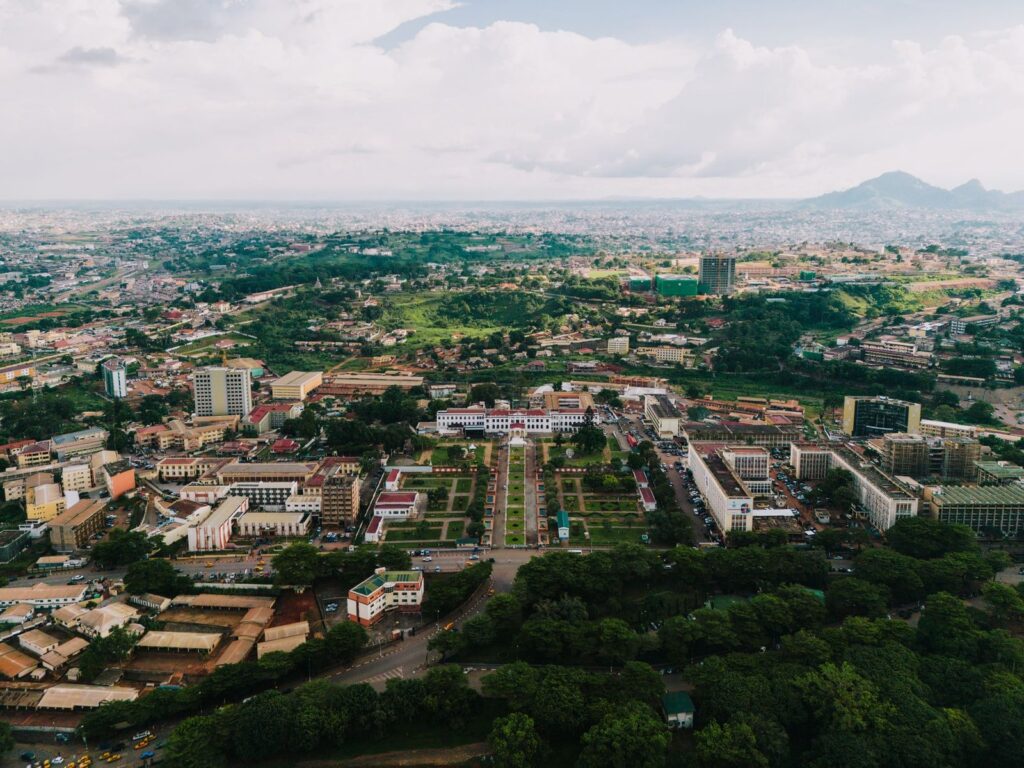
The Cameroonian parliament opened its second regular session of the year on June 9, traditionally dedicated to the budget orientation debate. Senators and deputies will examine the broad outlines of the future 2027 budget in a tense financial climate marked by falling public revenues and political uncertainty. This exercise is particularly scrutinised because it comes as the executive struggles to meet the ambitions set out in the initial 2026 finance law, which had an envelope of 8,800 billion CFA francs.
A budget orientation debate under cash flow constraints
In Cameroon’s parliamentary procedure, the budget orientation debate is the pivotal stage where the government presents its macroeconomic priorities for the following year to both chambers. In Yaoundé, this exercise takes on a unique dimension this year. Room for manoeuvre has narrowed due to the combined effect of tax collection falling short of projections and a debt service that increasingly weighs on the overall balance.
The 2026 budget, set at 8,800 billion CFA francs (about 13.4 billion euros), now appears to be a difficult target to meet. As in previous years, Cameroonian authorities are expected to submit a supplementary budget to correct the initial assumptions. This amending finance law will allow for downward adjustments to certain expenditure lines and formalise the gap between anticipated revenues and those actually collected in the first half of the year.
The weight of a reshuffle announced six months ago
Beyond the technical difficulty, a political variable adds to the challenge. For nearly six months, the possibility of a government reshuffle has been floated in Yaoundé without ever materialising. This prolonged wait fuels a wait-and-see attitude that paralyses parts of the administration and slows decision-making in spending ministries. Economic operators are also suspending their decisions while waiting to learn who their new counterparts in the executive will be.
This inertia translates concretely into a slowdown in budget execution. Several infrastructure projects financed by external resources are experiencing disbursement delays linked to the sluggishness of national counterpart funds. For the country’s technical and financial partners, the situation raises questions about the government’s ability to complete the reforms undertaken under the programme with the International Monetary Fund.
A regional financial equation
Cameroon, the largest economy of the Central African Economic and Monetary Community (CEMAC), plays a decisive role in the subregion’s macroeconomic stability. Any slippage in its public finances mechanically affects the common foreign exchange reserves managed by the Bank of Central African States (BEAC). The country accounts for nearly 40% of the zone’s gross domestic product, giving its budget decisions an impact far beyond its borders.
Parliamentarians will also have to contend with a volatile external environment. Oil prices, which still feed a significant portion of state revenues, remain subject to sharp fluctuations. The national hydrocarbon production is also experiencing a structural decline, making the diversification of tax bases all the more urgent. The budget orientation debate could therefore revive discussions on modernising the tax administration and broadening the taxable base—two recurring projects that have never truly been completed.
However, the expectations of parliament risk colliding with the constraints of the electoral calendar. Several elected officials openly question the relevance of building a solid three-year framework while the very composition of the government remains uncertain. In the corridors of the National Assembly, the session that opens is already seen as a transitional exercise, intended more to formalise short-term adjustments than to design a structural path. The Cameroonian executive approaches this parliamentary appointment without fully possessing the means of the ambitions declared at the start of the fiscal year.
You may also like
At the un, Togo’s 2 million dollar African map gamble sparks outrage at home
In Cameroon questions arise over whether billions have vanished from the safes of the Special Criminal Court
At the Ouaga 2000 arena, Benin’s Amazones etch their names in handball history
Niger’s state narrative masks internal fractures after Niamey mutiny
Niger: General Tiani faces growing unease within special forces after Russian involvement