Ouagadougou — For many women in rural Burkina Faso, the fear of cervical cancer loomed large until a bold initiative brought life-changing healthcare to their doorstep. Awa, 48, a mother of six living in Ipendo, recalls her hesitation when she first heard the public announcement about free screening. “I worried about what would happen if I tested positive. How would I afford treatment? But then I thought of my children and decided to go,” she shares. Her story reflects the struggles of countless women across the country who have long faced significant barriers to accessing essential health services.
From rural isolation to nationwide screening: breaking healthcare barriers
Before Burkina Faso adopted the World Health Organization’s global strategy to accelerate cervical cancer elimination, screening coverage was alarmingly low—below 8%—with rural areas being the hardest hit. Women often traveled long distances to reach equipped health centers, only to face financial constraints for transport and treatment. The shortage of trained healthcare professionals and lack of awareness further compounded the problem.
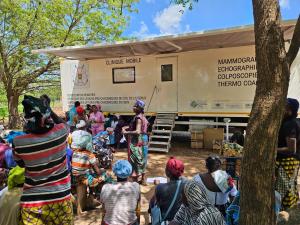
To tackle these challenges, the Burkinabè government implemented groundbreaking measures, as explained by Professor Nayi Zongo, a public health physician and coordinator of the National Cancer Control Program (PNLC). “The government introduced a decree ensuring free screening and treatment for precancerous lesions. It also upgraded peripheral health centers and deployed mobile clinics to reach women directly,” he states. These mobile units have become a cornerstone of health equity, traveling to villages, farms, markets, and even family compounds, allowing women to continue their daily routines without disruption.
Grassroots mobilization: empowering communities through education and access
Burkina Faso’s success lies in its multifaceted approach, combining financial accessibility (through free services) and geographic reach (via mobile clinics) with robust community engagement. The initiative also leveraged mass media campaigns on television and radio, as well as high-impact public events like October Rose, to raise awareness. A national cancer coalition—bringing together civil society, community leaders, and media—was formed to drive demand for screening services. This holistic strategy transformed cervical cancer prevention into a unifying national cause.
The World Health Organization (WHO) played a pivotal role in supporting Burkina Faso’s vision. The organization provided technical guidance for national guidelines, trained healthcare workers in detection and treatment, and bolstered community mobilization efforts. “WHO stood by us to strengthen our capacity and ensure that every woman, regardless of location, could access this vital service,” notes Professor Zongo.
Measurable impact: lives transformed through early detection
Between October 2024 and September 2025, Burkina Faso’s mobile clinics conducted 468 outreach missions across the country. These efforts reached nearly 2 million women, resulting in 106,446 screenings, 715 treatments for precancerous lesions, and 113 advanced diagnostic exams. These numbers are more than statistics—they represent saved lives and protected families.
For the WHO, Burkina Faso’s progress is a testament to the power of collaboration. “The country demonstrates that with strong political will and context-specific solutions, even the most daunting barriers can be overcome,” says Dr. Seydou Coulibaly, WHO Representative in Burkina Faso. He highlights the initiative’s regional significance: “Eliminating financial and geographic obstacles through free services and mobile clinics sets a powerful example for other African nations.”
Awa’s story: hope and prevention in action
Awa’s experience mirrors the impact of these clinics. “Our days are filled with farming, gardening, and selling vegetables at the market. When we heard about screening, I was afraid. But hearing from other women who had done it changed my mind. The healthcare workers explained each step clearly. When my result came back negative, I felt an immense sense of relief. Now, I urge every woman to get screened. Early detection makes all the difference,” she says with conviction.
For women like Awa, mobile clinics offer more than medical care—they provide the first opportunity to learn about cervical cancer, understand its risks, and discover prevention strategies. This foundational knowledge is critical, as it paves the way for proactive health management.
The initiative transcends health, touching on dignity, social justice, and family well-being. Each mobile clinic visit sends a clear message: health is a right, not a privilege. In Burkina Faso, this right is becoming a reality.