For countless Burkinabè, accessing medical care was once an uphill battle—one fought not just against illness, but against prohibitive costs. Until recently, essential treatments like dialysis and advanced imaging were out of reach for many, their lives hanging in the balance between financial burden and survival. But since March 13, 2024, a landmark decision by the Burkina Faso government has begun to dismantle these barriers, transforming healthcare from a privilege into a tangible right for vulnerable populations.
a lifeline for patients facing impossible choices
In the bustling corridors of the Bogodogo University Hospital Center, the weight of past struggles lingers in the air. Madi Diallo’s story is one of heartbreak—a story shared by too many families. “Three years ago, my sister needed emergency dialysis, but the 500,000 FCFA deposit required was impossible for us to pay. She passed away waiting,” he recounts, his voice heavy with grief. Today, that deposit no longer exists. “It’s a just measure, but for us, it’s too late,” he admits.
His experience reflects the harsh reality that has long defined healthcare in Burkina Faso. For years, life-saving treatments were reserved for those who could afford them, leaving countless patients to face illness without hope of recovery. The emotional and financial toll was devastating, with families forced to choose between medical care and basic survival.
groundbreaking reforms slash medical costs in public hospitals
In response to this crisis, Burkina Faso launched a sweeping reform to make healthcare more accessible. Effective from March 13, 2024, the government slashed fees for critical medical services across public healthcare facilities, dramatically reducing the financial burden on patients. This bold initiative, announced by Dr. Robert Lucien Jean Claude Kargougou, Minister of Health, marked a turning point in the country’s healthcare policy.
The reforms introduced sweeping changes:
- CT scans were reduced from 50,000 FCFA to 25,000 FCFA.
- MRI scans dropped from 100,000 FCFA to 40,000 FCFA.
- The mandatory 500,000 FCFA deposit for dialysis was completely eliminated.
These measures were designed to remove financial obstacles preventing patients—especially those from low-income backgrounds—from accessing essential diagnostics and specialized care.
real impact: affordable care becomes a reality
At the Bogodogo University Hospital Center, the changes are anything but theoretical. Patients now experience the relief firsthand. Elodie Nikiéma Ouédraogo, who recently underwent an MRI, shares her relief: “The cost is now very affordable. I paid just 40,000 FCFA, including supplies—elsewhere, the same exam could cost up to 150,000 FCFA or more.” For her, this reduction translates to financial breathing room, allowing her to maintain social commitments like participating in community savings groups.
Dr. Seydou Nombré, Director General of the hospital, confirms the reforms’ effectiveness: “The new MRI fee is now set at 40,000 FCFA, and the 500,000 FCFA deposit for dialysis has been removed entirely. For urgent dialysis, the cost is now just 2,500 FCFA.” These adjustments have made a tangible difference, easing the financial strain on patients and their families.
expanding access beyond the capital
The impact of these reforms extends far beyond Ouagadougou. In the regional hospital of Ziniaré, the changes are equally evident. The reduction in costs has not only improved affordability but also strengthened the center’s ability to deliver comprehensive care. Previously, patients often had to travel long distances to the capital for imaging services—an expense many couldn’t afford. Now, all required exams are available locally at the new rates.
Mady Zorné, Director General of the Ziniaré Regional Hospital, highlights the broader benefits: “Since the implementation of these measures, referrals to the capital have significantly decreased.” This shift not only eases the financial burden on patients but also enhances the efficiency of the entire healthcare system.
Dr. Zorné adds, “With access to necessary imaging exams, doctors can now make accurate diagnoses faster, improving the quality of care for everyone.” The reforms have also reduced the need for costly and time-consuming transfers, making healthcare more equitable for rural populations.
dialysis reforms: a lifeline for kidney patients
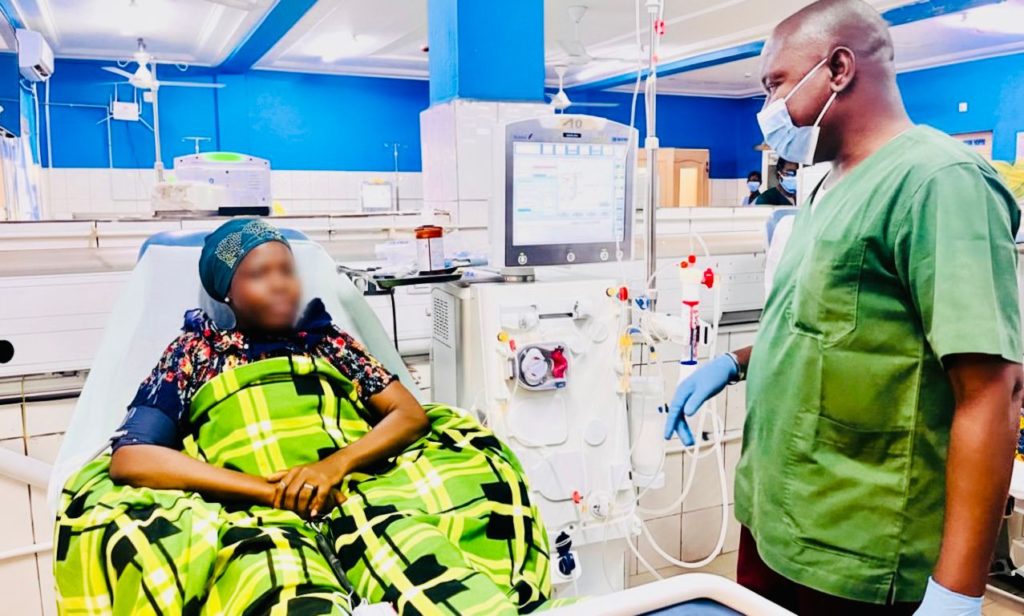
At the Yalgado Ouédraogo University Hospital in Ouagadougou, the dialysis unit is a testament to the reforms’ impact. Daily, nearly 100 patients rely on 34 machines, managed through three shifts to accommodate the high demand. Tuina Nsoma Hélène, head of the unit, emphasizes the significance of the changes: “The 500,000 FCFA deposit required to start dialysis has been removed—a critical barrier that once excluded countless patients from treatment.”
Since the reform’s implementation, 16 new patients have begun dialysis without the financial hurdle of the deposit. While the relief is profound, the demand far outstrips the available resources. “A death frees up a spot for someone waiting,” Hélène explains, underscoring the urgent need for more equipment and staff.
Despite these challenges, the reforms have already made a difference. Salimata Traoré Sanou, who has lived with kidney disease since 2018, reflects on the progress: “I started treatment two years after my diagnosis because of the cost. Today, seeing this financial barrier lifted is a recognition of our dignity as patients facing chronic illness.”
calling for further reforms and expanded access
While the elimination of the deposit is a major victory, challenges remain. Additional costs for complementary exams continue to burden chronic patients. Hélène advocates for further reductions: “At the end of each month, patients must weigh what they can afford. We hope the government will address these costs as well.”
Youl Sié, another dialysis patient, echoes this sentiment. “We need more dialysis centers closer to our communities. Being forced to travel far from home disrupts family life, education, and work—especially when we’re the backbone of our households.” His plea highlights the broader social impact of healthcare access: it’s not just about treatment, but about preserving stability and dignity.
a nation on the path to equitable healthcare
In Burkina Faso, the phrase “petit à petit, l’oiseau fait son nid” (little by little, the bird builds its nest) resonates deeply in the healthcare sector. The government’s efforts to ensure minimal access to care are beginning to bear fruit. While challenges like equipment shortages and long waitlists persist, the reforms have already transformed healthcare from a distant privilege into a growing right for many.
For those who now enter public hospitals without fear of crushing bills, the relief is immeasurable. Though the journey is far from over, each step forward represents hope—a hope that one day, healthcare will no longer be a luxury, but a fundamental right for every Burkinabè.
As the nation continues to build its healthcare infrastructure, the message is clear: progress is possible, one reform at a time.