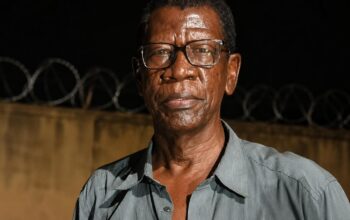
The sudden passing of Mahamadi Baguian, widely known as «Marshall», has sent profound shockwaves through Burkina Faso, unsettling the very foundations of its transitional government. Far from being an isolated incident, the death of this ardent supporter of Captain Ibrahim Traoré, which occurred while he was in state security custody, serves as a stark indicator of an escalating authoritarian drift with potentially far-reaching implications.
A symptom of deepening security paranoia
Mahamadi Baguian’s demise marks a significant psychological shift within the national political landscape: the apparent erosion of immunity for those who back the regime. Marshall was not an adversary, but a zealous advocate for the government’s narrative. His death unequivocally demonstrates that unwavering loyalty no longer provides a shield against the state’s repressive machinery. The current administration now appears to be turning against its own adherents, fostering an atmosphere of pervasive suspicion even among the so-called «patriotic» bloc.
This tragic event also casts a harsh light on the profound lack of transparency surrounding the detention system. Arrested on March 31, the activist succumbed under obscure circumstances, suggesting a security apparatus that may now be operating beyond conventional oversight and seemingly disconnected from fundamental judicial procedures.
A strategy of deflection amid operational challenges
For many observers, this internal radicalization is not a sign of strength, but rather a tactical deflection in response to a series of compounding failures. Under pressure, the regime seems to be adopting a strategy of aggressive advancement:
- Eroding moral legitimacy: A recent report from Human Rights Watch (HRW), detailing alleged massacres of civilians attributed to certain army units, has severely damaged the image of the national «reconquest» effort.
- Operational impasses: Despite persistent hawkish rhetoric, incidents such as the tragedy in Barsalogho serve as grim reminders of the state’s persistent inability to safeguard its populace from the pervasive jihadist threat.
- Curbing popular dissent: By targeting influential figures like Baguian, the junta appears to be attempting to preempt any internal opposition within a populace that is increasingly questioning the genuine effectiveness of an exclusively military-centric approach.
Towards fatal isolation for state leadership?
The political repercussions of this authoritarian trajectory could prove self-destructive for Captain Ibrahim Traoré. By criminalizing even minor criticism and instilling fear among his own «Wayiyans» (supporters), the head of state risks growing isolation, effectively alienating his most dedicated and organic defenders.
On a societal level, the outlook is bleak. Burkinabè citizens now find themselves caught in a perilous vise, threatened on one side by the indiscriminate terror of armed terrorist groups, and on the other by the unpredictable arbitrary actions of state security services. The civic space is progressively stifling.
What was initially hailed as a redemptive transition now appears to be spiraling into a definitive breakdown of the social contract. Popular support, once fervent, is gradually transforming into a pervasive sense of apprehension. In Burkina Faso, the era of triumphant slogans has faded, replaced by profound questions regarding the future of a revolution that now threatens to consume itself from within.