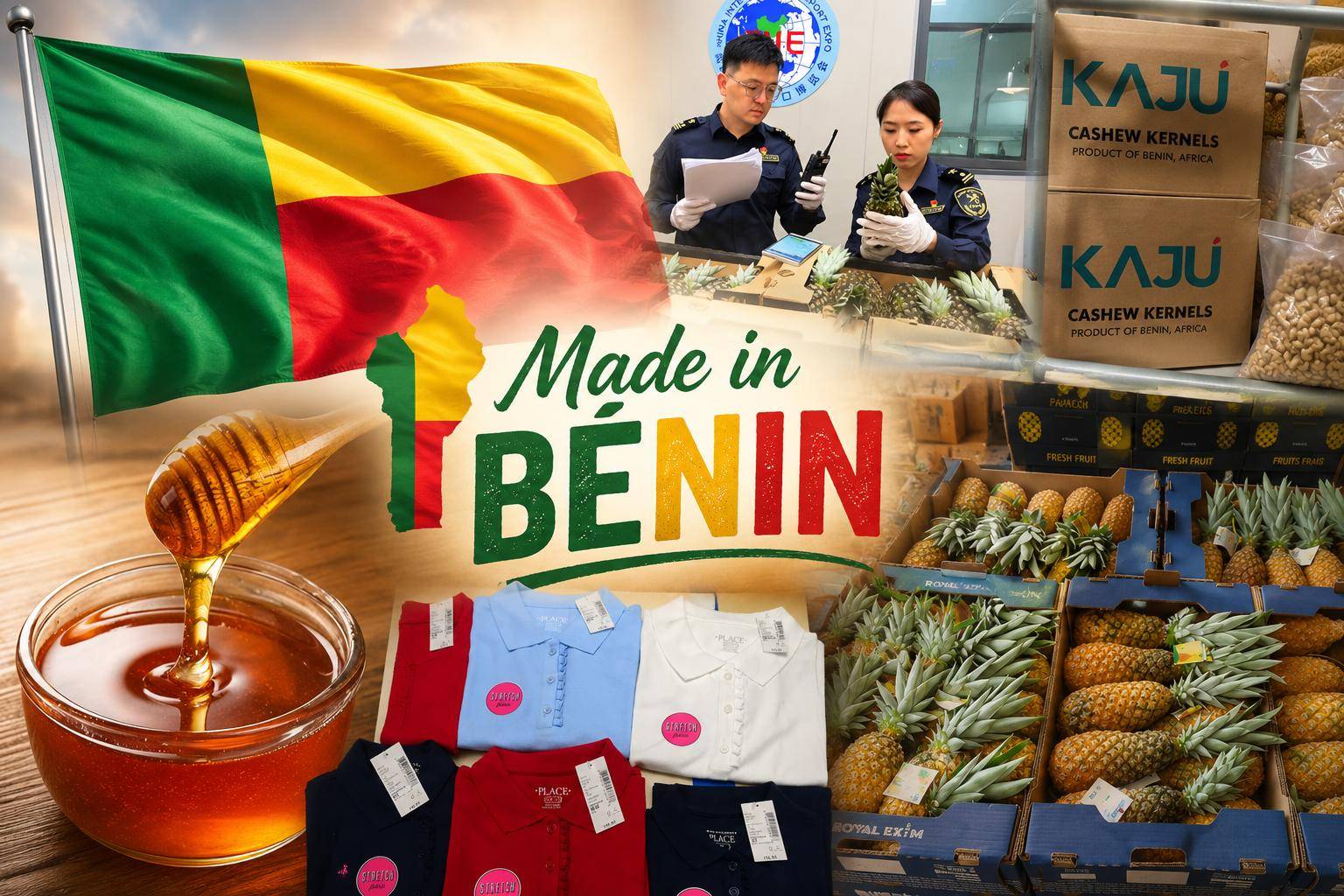
From the sugar-loaf pineapple of Allada to the organic soybeans of the Ouémé Valley and the golden honey of the northern hills, Beninese agricultural products are now winning over discerning palates worldwide. Behind this export surge lies a deliberate strategy spearheaded by President Patrice Talon’s administration to dismantle even the most stringent customs and sanitary barriers. This is the story of a green revolution reshaping the nation’s economy while empowering local producers.
Meeting global benchmarks: the quality leap
For decades, Benin’s agricultural ingenuity thrived within national borders or regional trade, stifled by daunting phytosanitary hurdles—particularly those imposed by the European Union and China. The pineapple saga encapsulates this uphill battle perfectly. Facing an export suspension to Europe in 2017 due to compliance gaps, Benin had no choice but to overhaul its entire approach to quality control. Exporting isn’t child’s play; it’s a high-stakes contest governed by rigid international norms.
Taking bold action, the government launched sweeping reforms, channeling substantial investments into upgrading national laboratories, including the Beninese Agency for Food Safety (ABSSA). These meticulous structural changes paid off: Benin secured the coveted certifications that now guarantee permanent access to Western and Asian markets. Today, its products stand out not only for their superior taste but for their flawless traceability and uncompromising safety standards.
The rise of Beninese honey: the “liquid gold” capturing Europe
Diplomatic breakthroughs paved the way for this agricultural triumph. The watershed moment arrived in early 2018 when European authorities officially approved Benin’s honey for export to the EU. This landmark decision validated the product’s purity and unique character, often crafted through eco-friendly, biodiversity-conscious beekeeping practices across the country’s northern and central regions.
For local beekeepers, the 2018 authorization marked a paradigm shift. Beninese honey has evolved from a humble local harvest into a sought-after luxury item cherished for its therapeutic properties and distinctive flavor profile. The resulting price stability and premium earnings are transforming beekeeping into a highly attractive venture for rural youth, injecting fresh dynamism into the sector.
Diversified champions on the world stage
The honey success story is just one chapter in a broader narrative. In October 2021, Benin’s Pineapple Pain de Sucre from the Allada Plateau earned the country’s first-ever Protected Geographical Indication (PGI) registration with OAPI. Celebrated for its exceptional sweetness, this pineapple now graces fresh produce aisles across the West or is exported as 100% pure juice, showcasing Beninese freshness at its finest.
The soy sector is also riding high, especially organic varieties that are highly sought after in Europe and Asia. Thanks to the state-of-the-art Glo-Djigbé Industrial Zone (GDIZ), Benin no longer ships raw beans but instead delivers value-added processed goods. Meanwhile, cashew nuts are following the same virtuous trajectory: the gradual phase-out of unprocessed nut exports is enabling on-site kernel processing, creating thousands of jobs before global distribution.
Real-world impact: smiles back in rural communities
On the ground, these achievements translate into tangible improvements in everyday life for producers and their families.
« Today, we sell our harvest with the certainty of a fair price, » shared a soybean farmer from Savalou, reflecting the newfound confidence sweeping through agricultural communities.
The secure foothold in international markets, secured through structural reforms, is stabilizing incomes, strengthening cooperatives, and reducing rural precarity. The drive for compliance has also spurred professionalization across the sector: farmers receive targeted training, adopt modern harvesting techniques, and minimize chemical inputs—safeguarding soil health for future generations.
For the nation, this agricultural renaissance is a major foreign exchange generator and a powerful lever for balancing trade deficits. With agriculture employing over 60% of the active population, it has unequivocally become the engine driving national development.
The “Made in Benin” seal: a mark of excellence
Benin’s agricultural identity has undergone a profound transformation. Through a relentless focus on quality, institutional reforms, and landmark certifications—from the 2018 honey milestone to the 2021 pineapple recognition—the nation has etched its signature on the global stage. Whether it’s the sun-kissed honey of the forests or the luscious pineapples of the plateaus, Beninese craftsmanship now commands pride and premium pricing worldwide. This success story proves that with clear political vision and collective producer commitment, Africa can nourish the world with unrivaled excellence. The “Made in Benin” label is no longer just a tag—it’s a badge of prestige and trust.