Following the military coup that unfolded in Niger on July 26, 2023, international responses were swift. Key organizations such as ECOWAS, the AU, and nations including the USA, France, and Russia quickly articulated their positions. In Bénin, the involvement of President Patrice Talon and discussions of a potential armed intervention have met with considerable dissent. Western media reports suggest Bénin might commit troops alongside ECOWAS to confront the military junta. Many stakeholders, notably the Catholic Church and political figures, have openly declared that a military approach is not the optimal solution, instead advocating for diplomatic resolution to the crisis.
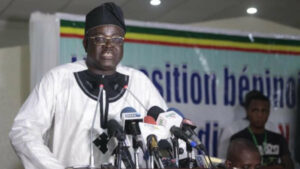
Elected representatives from the opposition party, « Les Démocrates », promptly questioned the government regarding the situation, submitting a comprehensive list of 19 urgent inquiries. Their primary concern revolves around the rationale for Bénin’s military commitment, especially considering the longstanding fraternal relationship between Bénin and Niger. They expressed apprehension about adherence to the Beninese constitution, the safety of deployed troops, and the potential for escalation of the conflict, with severe implications for civilian populations and Bénin itself.
Beyond military considerations, significant economic and diplomatic issues were also brought to light. The decision to close borders with Niger could have profound consequences for the Autonomous Port of Cotonou and the broader Beninese economy, which is already feeling the strain of ECOWAS sanctions. Faced with escalating prices for essential goods and widespread repercussions for economic actors, the opposition has demanded concrete answers from the government.
Dialogue is emerging as a preferred solution for numerous regional and international stakeholders. Opposition lawmakers reminded Patrice Talon of his own past statements advocating dialogue as an alternative to coups d’état, urging him to implement such an inclusive dialogue within Bénin. The current moment calls for deep reflection, critical questioning, and, most importantly, the pursuit of peaceful, consensual solutions for the region’s future.
oral question with debate to the government
On July 26, 2023, a military coup in Niger abruptly ended the constitutional term of President Mohamed Bazoum. This event provoked reactions from various states globally and from sub-regional and regional organizations, including ECOWAS, the AU, and the UN. On Thursday, August 10, 2023, ECOWAS Heads of State and Government convened an extraordinary summit, concluding with decisions that included ordering the deployment of the ECOWAS standby force to restore constitutional order in the Republic of Niger.
Subsequently, the government of Bénin, through its official statements, announced its decision to commit Beninese troops to the ECOWAS contingent tasked with confronting the military junta in power. In light of this governmental choice to involve the Beninese state in a potential conflict against the brotherly and sovereign people of Niger, a decision perceived as violating Article 101 of our constitution, and given the already severe economic, social, and security impacts of sanctions imposed by the ECOWAS Heads of State conference on July 30, 2023, in Abuja, the national assembly, exercising its powers under Article 108 and its subsections of the National Assembly’s internal regulations, requests the government to address the following concerns:
- What measures has the government taken to consult parliament regarding the deployment of Beninese troops to ECOWAS operational theaters in Niger, should the military option be implemented, in accordance with Article 101, paragraph 1, of our constitution, which states: « a declaration of war is authorized by the National Assembly »?
- In anticipation of this potential conflict with the sovereign people of Niger, several nations, such as France and the United States, have made arrangements for the evacuation of their citizens from Niger. What provisions has the Beninese government made for its citizens residing in Niger?
- Given that Bénin and Niger share a fraternal bond, what justifies Bénin’s agreement to send troops to attack Niger, while other ECOWAS countries not bordering Niger decline to participate?
- What is the estimated number of Beninese soldiers and the primary logistical support the government intends to provide to the ECOWAS contingent? What is the projected cost of Bénin’s potential involvement in this operation? Who will bear these expenses?
- In the event of aggression against our brotherly nation, Niger, can our government guarantee that no civilian lives in Niger, nor those of our soldiers, will be lost?
- What provisions has the government made for each soldier in terms of bonuses, and for each soldier’s family in the event of fatalities among Beninese troops in the theater of operations?
- As a country bordering Niger, what assurance can the government provide that, in the event of retaliation by the Nigerien army, casualties will not occur on Beninese soil?
- Can the government confirm that, in the event of war with Niger, potential jihadists will not exploit the situation to infiltrate our country, as observed in Libya?
- Would it not be wiser to prioritize political and diplomatic dialogue, as was the approach in Mali, Burkina Faso, and Guinea?
- Is it not possible for Bénin to lead, as it has in the past within ECOWAS, in preventing coups d’état by actively combating electoral exclusions, imprisonment, and exile of political opponents?
- Why is ECOWAS quicker to react against military coups while tolerating institutional coups, as witnessed in Côte d’Ivoire in 2020, Guinea in 2021, and Bénin in 2019, 2020, and 2021, among other nations?
- Is the restoration of President Mohamed Bazoum’s power more valuable than the lives of thousands of Nigerien civilians and ECOWAS contingent soldiers who could perish?
- What would be the future of Niger following such a conflict?
- The populations within the ECOWAS region are losing faith in our organization, often labeling it a « union of Heads of State ». What steps does Bénin intend to take to restore the reputation of this sub-regional body?
- Following the extraordinary ECOWAS summit, President Patrice Talon mentioned dialogue as an alternative to coups d’état. When can the inclusive dialogue, so desired by the Beninese opposition, be expected?
- What are the impacts of closing our borders with Niger on the Autonomous Port of Cotonou?
- What are the effects of the sanctions already imposed by ECOWAS on the Beninese economy and its citizens?
- What immediate measures has the government already implemented to counteract the rising prices of essential commodities?
- What fate does the Beninese government foresee for economic stakeholders already suffering from the consequences of ECOWAS sanctions (port operators, transporters, business owners, etc.)?