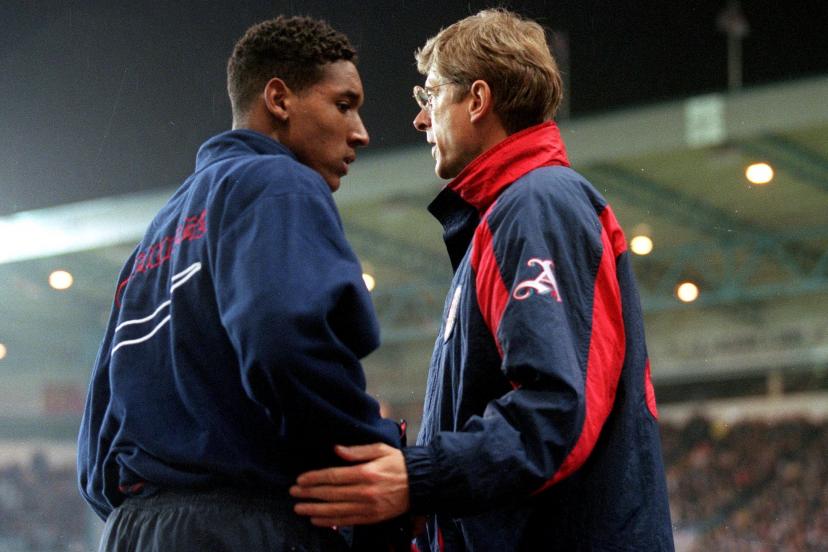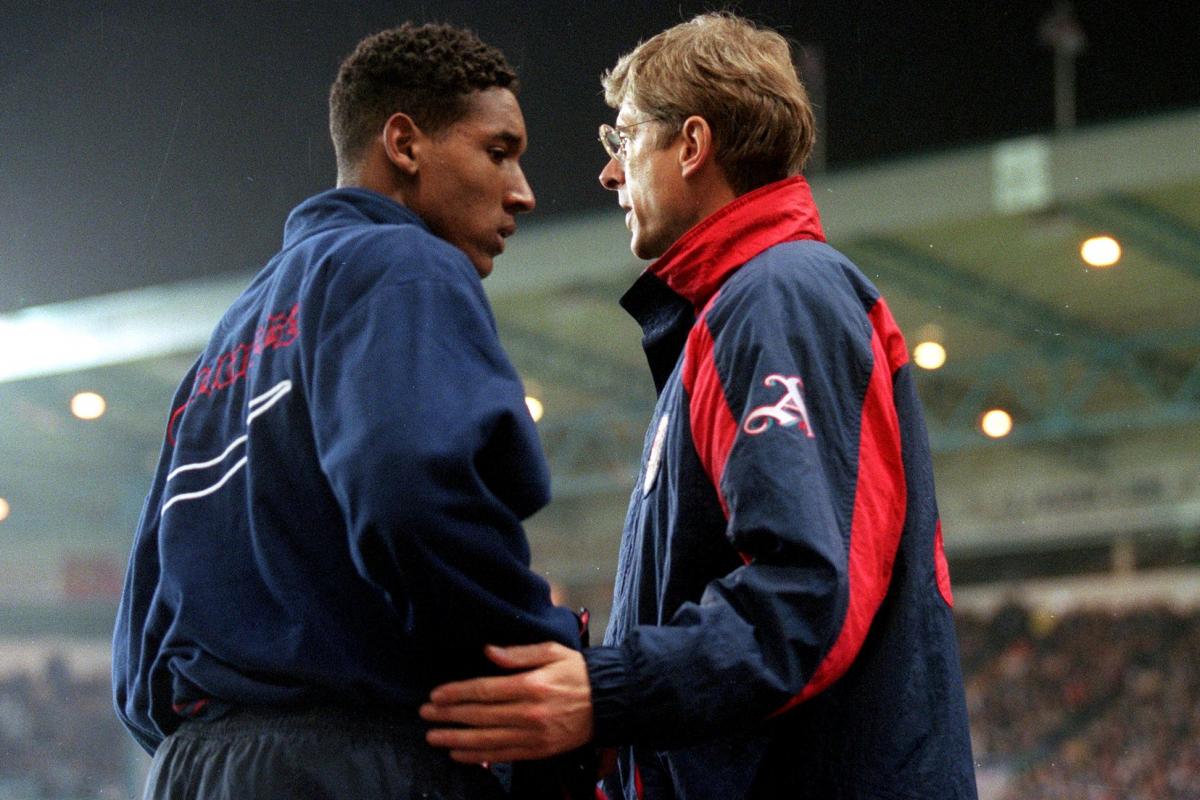
In the winter of 1997, the football world witnessed an unprecedented transfer saga that would reshape the future of a teenage sensation. Nicolas Anelka, a 17-year-old prodigy from the Paris Saint-Germain youth academy, made headlines when he defied club expectations and signed with Arsenal in a move that left Parisian officials stunned.
The transfer, finalized on February 22, 1997, was anything but smooth. Anelka, who had joined PSG from Clairefontaine, had already shown flashes of brilliance in Ligue 1, scoring a goal and providing an assist in a dominant 4-0 victory over Lens just months earlier. Yet, his rise at the club was stifled by limited playing time and a perceived lack of faith from the coaching staff.
a rebellion against the parisian system
Frustrated by his role as a substitute and the arrival of a new striker on loan, Anelka decided to take matters into his own hands. On January 13, 1997, Arsenal’s vice-chairman David Dein sent a fax to PSG, declaring the club’s intention to engage with the young forward. This was the spark that ignited a legal and public relations firestorm.
The French football authorities, including the Ligue Nationale de Football (LNF), immediately intervened. They argued that Anelka, as an apprentice player, was bound by French football regulations to sign his first professional contract with his parent club, PSG. The dispute centered on whether these national rules could supersede European regulations, particularly the landmark Bosman ruling of December 1995, which allowed players to move freely at the end of their contracts.
Nicolas Anelka, backed by his father, remained resolute. In a bold statement, he declared, “The PSG directors presented the situation as it suited them. They claimed I would never leave and that Arsenal would never reach an agreement with them. Yet here we are—an agreement has been made, and I am going. So, who is the loser?”
the legal battle and the eventual deal
The conflict escalated as PSG’s then-president Michel Denisot publicly accused Anelka of “a rare act of insolence,” and the club threatened to loan him out to Servette FC for the remainder of the season. Meanwhile, Arsenal manager Arsène Wenger stood firm, asserting that European law protected Anelka’s right to move freely once his contract expired. Wenger’s confidence stemmed from the Bosman ruling, which he argued made the case clear-cut.
As the Ligue Nationale de Football prepared to take the matter to FIFA, Sepp Blatter, then-Secretary General of the organization, added fuel to the fire. He questioned the French stance, stating, “The French seem upset about their players leaving. Yet they do not seem as concerned when young African or South American players depart for European clubs. Perhaps it is time to allow players over 16 to pursue opportunities in bigger teams.”
In a dramatic twist, just days before FIFA was set to rule on the case, PSG and Arsenal reached a last-minute agreement. The deal, finalized in under 48 hours, saw Anelka join Arsenal on a free transfer after his contract expired in June. PSG received a reported 5 million francs (approximately €762,000 at the time), while Anelka secured a lucrative six-year deal with Arsenal, making him one of the highest-paid teenagers in football.
the aftermath and Anelka’s breakout
Michel Denisot later reflected on the episode, admitting, “There was a gap in the net. It was not a pleasant moment for either club. It turned out that everyone had the right to act as they did. The noise at the time was because a very talented player was leaving for free immediately after completing his training. Nicolas was a young player, and with Ricardo, we wanted to take him as far as possible while protecting him. But he wanted to go. That was the reality.”
The transfer proved to be a masterstroke for Arsenal. Though initially overshadowed by established stars like Dennis Bergkamp and Ian Wright, Anelka quickly broke into the first team and became a pivotal figure. His meteoric rise culminated in the 1998-1999 season, when he became the first non-British player to win the Premier League Young Player of the Year award. However, his time at Arsenal was short-lived. In 1999, he once again made headlines with a high-profile move to Real Madrid for a staggering 220 million francs (approximately €33.5 million).
For PSG, the episode highlighted the challenges of retaining young talent in an era where clubs across Europe were increasingly willing to exploit legal loopholes. Despite the bitterness, the relationship between the clubs and their managers remained cordial in the long run. Denisot later shared a warm anecdote, recalling how he and Arsène Wenger maintained a positive rapport, even collaborating on future transfers years later.