
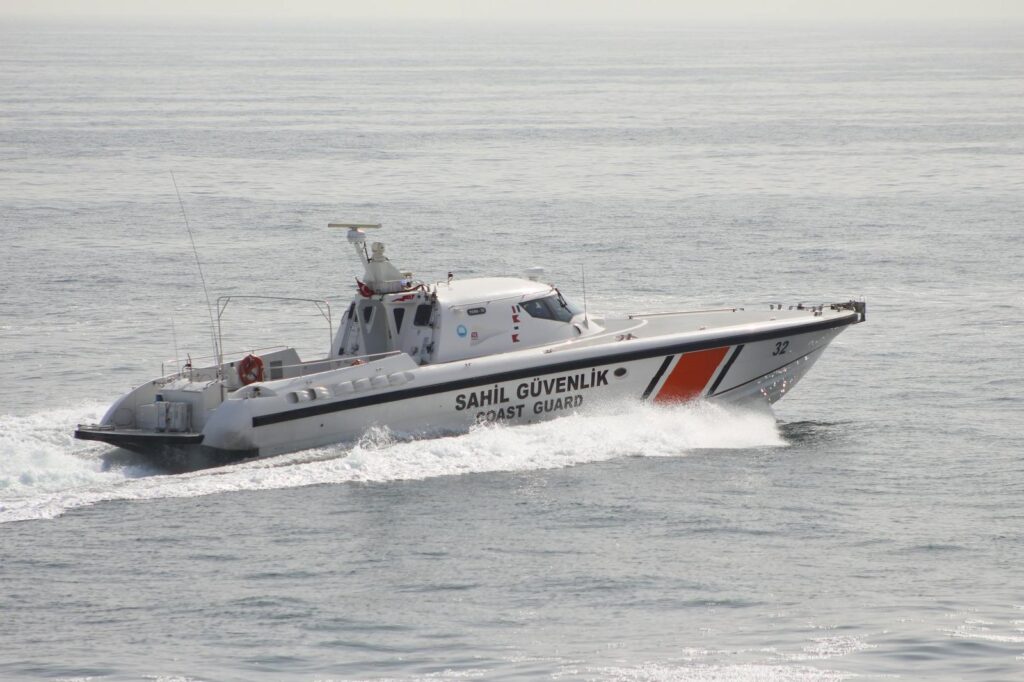
Senegal’s maritime security landscape is undergoing a significant transformation. Following the exit of French forces from its territory in 2024, Dakar has decided to entrust a portion of its coastal surveillance responsibilities to Turkey. This strategic pivot under President Bassirou Diomaye Faye and Prime Minister Ousmane Sonko reflects a deliberate recalibration of the country’s security partnerships, raising a pivotal question across West African capitals: does this shift represent a meaningful step toward true sovereignty, or merely a substitution of one dependency for another?
Dakar’s diplomatic pivot gains momentum
Since the administration led by the Pastef coalition assumed office in April 2024, Senegal’s foreign policy has undergone a noticeable realignment. The closure of French military bases—formalized in mid-2024 and completed in 2025—fulfills a campaign pledge to break free from the post-independence cooperation frameworks. The presence of French troops under the former Éléments français au Sénégal (EFS) had become a politically sensitive issue for an administration elected on a sovereignty-first platform.
The void left by Paris was quickly filled. Ankara, which has systematically expanded its footprint in Africa over the past decade, has positioned itself as a strategic alternative. Turkey now offers Dakar comprehensive maritime surveillance support—a critical sector for a nation whose Exclusive Economic Zone (EEZ) spans roughly 158,000 square kilometers, encompassing vital fisheries, migration routes, and hydrocarbon interests.
Turkey’s expanding role in West African security
The choice of Turkey as a security partner is far from arbitrary. Ankara has strategically leveraged its defense industry—home to firms like Baykar, ASELSAN, and ARES Shipyard—to bolster diplomatic influence across the continent, including in Tunisia, Niger, Togo, and Nigeria. The Bayraktar TB2 drone, now operational in over thirty nations, symbolizes a broader strategy combining technology transfer, crew training, and operational cooperation. For Senegal’s coastal security needs, the Turkish proposal is expected to include patrol vessels, advanced monitoring systems, and specialized training for Senegalese maritime personnel.
This development aligns with a broader regional trend. The Gulf of Guinea remains one of the world’s most vulnerable maritime zones, plagued by piracy, illegal fishing, and transnational trafficking. Estimates suggest that illegal, unreported, and unregulated (IUU) fishing costs West Africa billions annually—a loss that underscores the urgency of robust maritime governance. For Senegal, securing its coastline is not just a matter of national sovereignty but also a defense of an economic lifeline.
Sovereignty gain or geopolitical substitution?
The implications of this partnership extend beyond the exchange of one security provider for another. Analysts in Dakar are scrutinizing whether the move will translate to genuine sovereignty or merely replace one form of dependence with another. Acquiring Turkish capabilities entails reliance on foreign supply chains, technical maintenance, and training protocols—dependencies that could prove difficult to untangle. Past cases, such as Ankara’s sustained influence in Libya following military intervention, serve as cautionary tales for observers.
Yet, diversification of partnerships remains, in theory, a tool for asserting autonomy. By reducing reliance on a single historical ally, Senegal gains leverage in negotiations and the ability to explore more favorable terms. Unlike France, Turkey carries no colonial legacy in Africa and does not impose explicit political conditions on arms sales—an argument that resonates strongly with the current government’s narrative.
The true test of this partnership will hinge on three critical factors: the operational readiness of deployed assets along Senegal’s coastline, the level of autonomy granted to local maritime forces in executing missions, and the transparency of contracts signed with Turkish defense contractors. Without these safeguards, the shift from French to Turkish partnerships may amount to little more than a change in orbit. The coming months, marked by potential framework agreements between Dakar and Ankara, will provide clearer answers.
You may also like
Cameroun : les signes avant-coureurs d’une transition politique
Gabon’s economic management hindered by unreliable public data
Niger: General Tiani faces growing unease within special forces after Russian involvement
Mali : 17 morts dans les rangs des dozos, le JNIM accentue sa pression
Sahel : le pari des juntes tourne-t-il à l’échec sécuritaire ?