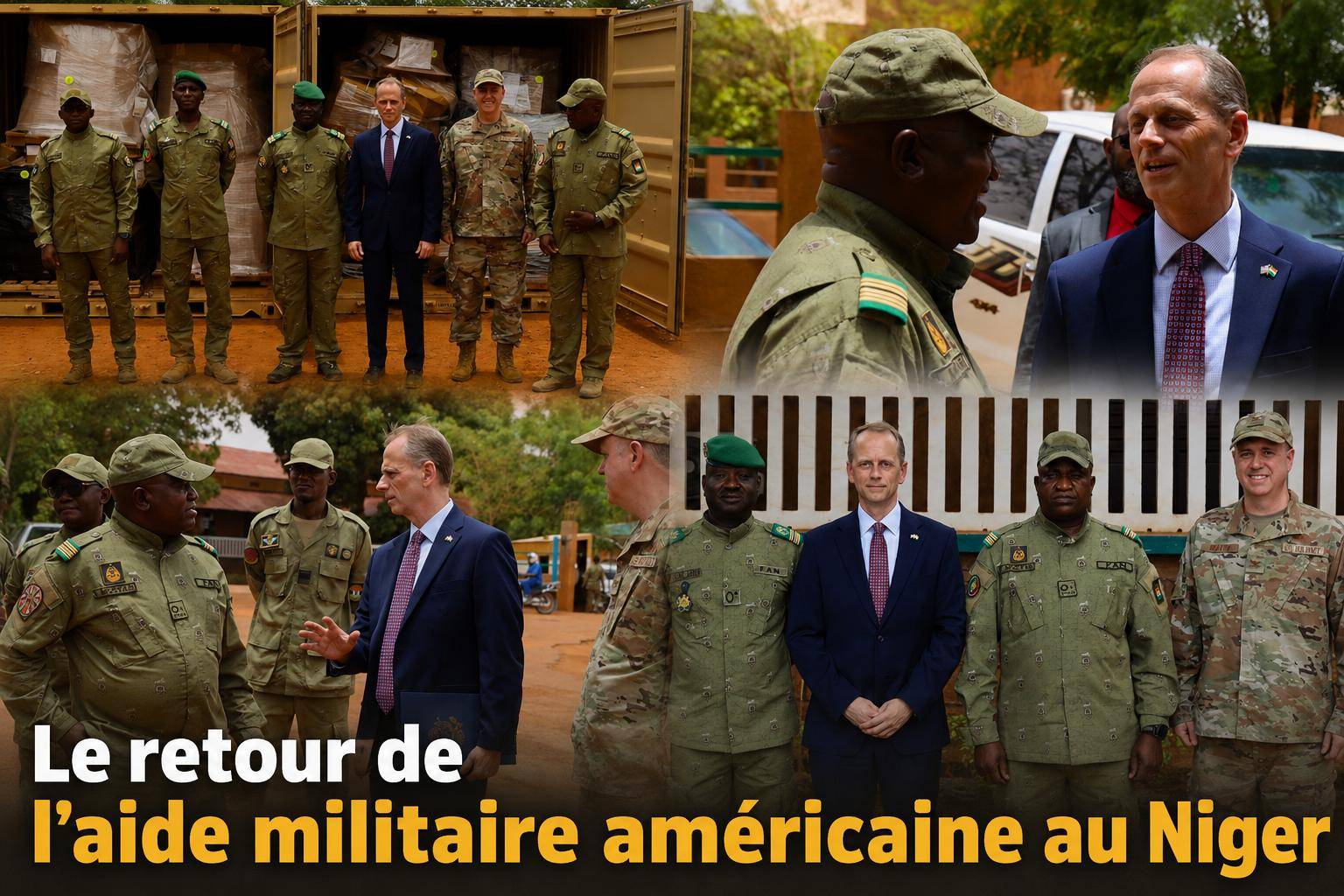
The Nigerien Armed Forces (FAN) logistics hub in Niamey recently marked a pivotal moment in the country’s defense strategy. Nine large military containers, fully loaded with advanced equipment from the United States, were officially handed over to the FAN command. This delivery represents a major step forward in the fight against terrorism and cross-border crime, reinforcing the operational readiness of Nigerien troops on the front lines.
A strategic reinforcement for Niger’s military
The ceremony took place at the FAN logistics center in Niamey, where high-ranking military officials and defense experts gathered to oversee the arrival of the consignment. The shipment includes critical spare parts, tactical communication systems, personal protective gear, and first-line maintenance tools—all designed to enhance the resilience and combat effectiveness of Nigerien soldiers. These resources are now being deployed to address pressing security threats along the country’s borders and in volatile regions such as the tri-border zone with Mali and Burkina Faso, as well as the Lake Chad basin.
Combating terrorism and securing borders
This military aid underscores the deepening defense cooperation between Niger and the United States. The equipment will play a vital role in supporting the FAN in their ongoing counterterrorism operations, curbing organized cross-border crime, and strengthening national security infrastructure. For soldiers stationed in remote and isolated areas, this hardware provides a much-needed advantage in maintaining control over rural territories where state presence is often limited.
The timing of this assistance is particularly significant, as Niger continues to face relentless asymmetric threats. The equipment aims to reduce repair delays, improve communication reliability, and boost overall mission success rates in a region plagued by extremist violence.
From diplomatic rupture to pragmatic cooperation
The arrival of this US military aid also signals a notable shift in Niger’s foreign policy approach. Just two years ago, the transitional government took a firm stance against Western military presence, demanding the withdrawal of American and French troops as part of a broader push for national sovereignty. The closure of the US drone base in Agadez was a direct consequence of this policy. Yet, the evolving security landscape and the intensifying threat posed by armed groups have prompted a reassessment of priorities.
This decision to accept American military support, despite past political tensions, reflects a pragmatic turn in Niamey’s strategic thinking. It demonstrates that sovereignty must sometimes be balanced with the harsh realities of asymmetric warfare, where operational efficiency often outweighs ideological posturing.
A balanced approach to international alliances
Observers of the Sahel region note that Niger is carefully diversifying its defense partnerships rather than relying solely on one foreign power. While maintaining close security ties with new allies like Russia, Turkey, and Iran, Niamey is also rebuilding selective cooperation with Washington. This balanced approach allows Niger to secure vital military resources without becoming overly dependent on any single partner.
The United States, for its part, has adopted a flexible strategy. Despite the temporary halt in aid following political upheavals in 2023, Washington remains actively engaged in the region to prevent a geopolitical vacuum. The delivery of these containers signals a mutual effort to rebuild trust, focusing on practical logistics support rather than large-scale troop deployments.
As one internal FAN logistics report succinctly put it: “In matters of defense, operational effectiveness on the battlefield is the only rule that truly matters.”
A new chapter in Niger’s defense strategy
The reception of this US military aid by the FAN marks a turning point in Niamey’s approach to security. By embracing external support once again, Niger is proving that the pursuit of absolute sovereignty can be tempered by the urgent demands of national security. In a region where extremist threats continue to escalate, the diversification of military partnerships has become a cornerstone of the state’s survival strategy.