The Mali military junta faces a severe security crisis after rebel forces—comprising Tuareg separatists and jihadist groups—launched coordinated attacks across the country, including the capital, Bamako. The situation escalated dramatically when Russian troops, part of the Africa Corps (successor to the Wagner Group), unexpectedly withdrew from Kidal without resistance, allowing the rebels to seize control.
Russia’s puzzling retreat from northern Mali
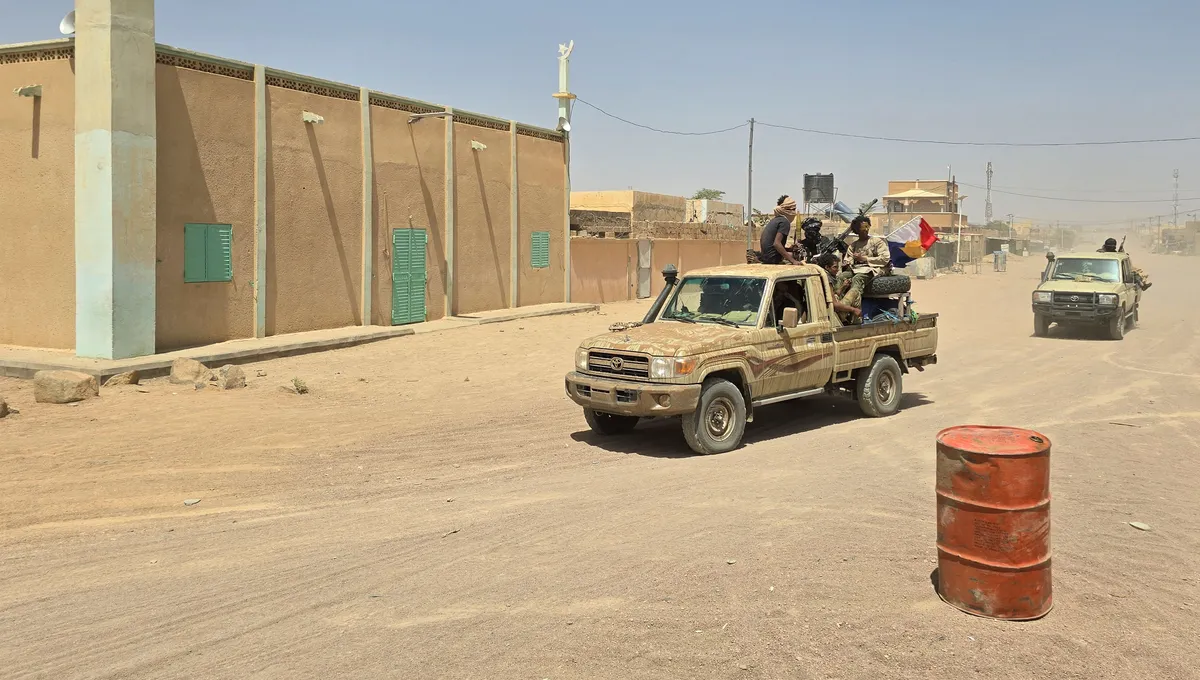
Video footage captured the unusual spectacle of Russian military vehicles departing Kidal, a strategic northern city recaptured by Malian forces in 2023 with Russian support. The swift withdrawal marked a stark contrast to earlier claims of stabilizing the region. The retreat occurred just hours after the Group for the Support of Islam and Muslims (GSIM), an Al-Qaeda-affiliated faction, claimed responsibility for the nationwide attacks, explicitly urging Russia to refrain from intervening to preserve potential future alliances.
Despite deploying around 2,500 troops in Mali, the Africa Corps remained passive during the most critical security threat in five years. This inaction underscores a significant setback for both the Malian junta and Moscow, which had positioned itself as a key ally after the 2022 expulsion of French forces.
Mali’s crumbling stability under junta rule
The Malian government has suffered devastating blows in recent days. The Defense Minister was killed in a targeted strike on his residence, while simultaneous attacks across multiple regions caught authorities off guard. Rebel groups now appear to be extending their territorial control, further weakening the junta’s already fragile grip on power. The loss of Kidal, once a symbol of the regime’s strength, has compounded the crisis.
Kidal, a former stronghold of the Tuareg rebellion, was reclaimed in 2023 following a Russian-backed military campaign that ousted pro-independence forces after 11 years of control. The city’s fall not only dismantles a key junta achievement but also raises questions about the effectiveness of Russian military support in the region.
regional implications of Mali’s growing insecurity
The deteriorating security situation in Mali poses grave risks beyond its borders. The GSIM, which spearheaded the recent offensive, maintains ties with Al-Qaeda and has ambitions to destabilize neighboring countries. Niger and Burkina Faso, both members of the Sahel Alliance, could face increased threats if the Malian capital, Bamako, falls under rebel control. Coastal West African nations are also vulnerable to potential spillover effects from the ongoing conflict.
The junta’s strategy—marked by the dissolution of political parties and the appointment of a non-elected president—has fueled public discontent. Recent blockades preventing fuel imports from neighboring countries have worsened economic hardships, leaving citizens caught between authoritarian rule and insurgent violence. While the regime’s collapse remains uncertain, its current trajectory suggests a precarious position.
a decade of failure in Mali’s security fight
Mali’s security challenges trace back to France’s 2014 intervention, which temporarily halted a jihadist advance on Bamako. However, subsequent efforts to restore stability faltered, culminating in military coups, the expulsion of French forces, and their replacement by Russian mercenaries. Four years later, the situation has deteriorated further, leaving civilians to bear the brunt of the consequences.
The sequence of events—from initial foreign intervention to the rise of militant groups—highlights systemic failures in governance, military strategy, and international partnerships. As Mali grapples with fragmentation between separatist and jihadist factions, the broader Sahel region faces an alarming escalation of violence with no clear resolution in sight.