Niger’s diplomatic storm: Spain withdraws consul amid visa trafficking allegations
In a decisive move that has sent ripples through Niamey’s corridors of power, Spain has quietly but firmly recalled its consul in Niger. This bold diplomatic action follows the dismantling of a high-level visa trafficking ring operating within the Schengen consular network, with each fraudulent permit allegedly fetching over 2.5 million CFA francs on the black market. While Madrid remains tight-lipped about procedural details, security sources in Niger confirm that the expulsion is directly tied to an unfolding corruption scandal that has exposed deep fissures within the transitional government.
The consul’s removal marks a rare public concession by Spain’s foreign ministry, traditionally cautious when reshuffling diplomatic staff. Yet the decision underscores the gravity of allegations: the diplomat is accused of either actively facilitating or tacitly enabling the issuance of Schengen visas outside authorized channels. This development not only discredits Niamey’s consular integrity but also highlights a sophisticated smuggling operation with direct access to European embassies.
A web of corruption woven into the heart of Niger’s transitional regime
The scandal’s roots extend far beyond a single diplomat’s misconduct. Investigations by Niger’s Directorate General for Documentation and External Security (DGDSE) reveal a systemic corruption network embedded within the highest echelons of the ruling National Council for the Safeguard of the Homeland (CNSP). Far from a grassroots scheme, this operation was a lucrative enterprise orchestrated from the inner sanctums of power, where elite connections trumped legal procedures.
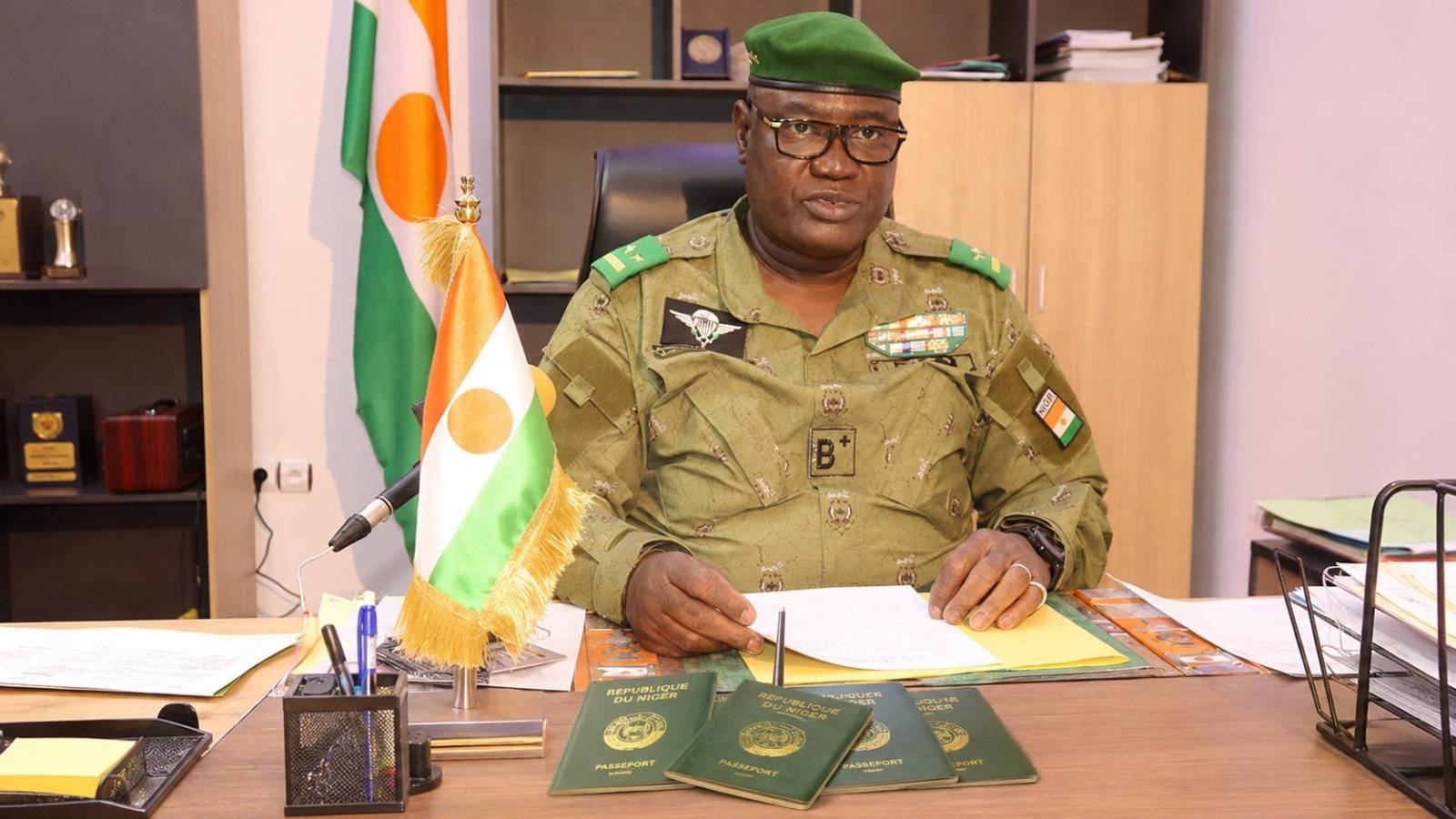
Central to the probe is the wife of Brigadier General Mohamed Toumba, Niger’s Interior Minister and the CNSP’s third-ranking official. Leveraging her husband’s political clout, she allegedly established a parallel visa distribution system, bypassing official protocols. Each illicit Schengen permit or residency title was sold for a staggering 2.5 million CFA francs—equivalent to roughly 3,800 euros—a price point reserved for affluent traders and aspiring migrants rather than the average Nigerien. This monetization of diplomatic privileges transformed state-sanctioned corruption into a lucrative state-backed business.
Internal power struggles erupt as counterintelligence strikes
The DGDSE’s offensive against the trafficking ring has triggered a political earthquake within the CNSP. Spearheaded by Lieutenant-Colonel Souleymane Balla Arabé, head of Niger’s counterintelligence, the operation involved intercepting communications and compiling forensic evidence implicating the Interior Minister’s inner circle. This move has left General Toumba politically vulnerable, exposing fractures within a junta already plagued by factional infighting.
For a minister tasked with upholding law and order, being linked to transnational crime deals a severe blow to his credibility—both among his peers and the military rank-and-file. The scandal has transformed a once-unassailable figure into a symbol of the junta’s hypocrisy, particularly as the CNSP had pledged to dismantle the very corruption it now embodies.
General Tiani’s silence speaks volumes
The absence of any public response from General Abdourahamane Tiani, Niger’s transitional president, has amplified scrutiny of the regime’s commitment to its anti-corruption pledges. Despite the internationalization of the scandal—exemplified by Spain’s consul expulsion—Tiani has maintained a conspicuous silence. No official statements, internal investigations, or disciplinary measures have been announced regarding General Toumba or his associates.
Analysts in Niamey interpret this inaction as either a calculated political strategy or tacit complicity. When the CNSP seized power in July 2023, it vowed to eradicate impunity and dismantle the corrupt structures of the previous administration. Yet, by shielding a key ally from accountability, Tiani risks undermining the junta’s moral authority and reinforcing perceptions of a regime prioritizing factional loyalty over the rule of law.
Niger’s paradox: anti-Western rhetoric vs. Schengen profiteering
The visa trafficking scandal lays bare a glaring contradiction at the heart of Niger’s transitional government. While publicly distancing itself from Western partners, the regime has quietly profited from the very access to Europe it condemns. Spain’s decisive action demonstrates that Madrid will not tolerate corruption within its consular networks. Whether Tiani will follow suit—or succumb to the pressures of political expediency—remains the critical question for Niger’s future.
The ball is now in Tiani’s court. Will he confront the corruption embedded in his ranks, or will the junta’s internal power struggles ensure its continuation? The answer will define not only the trajectory of Niger’s transition but also the credibility of its promises to the people it claims to serve.