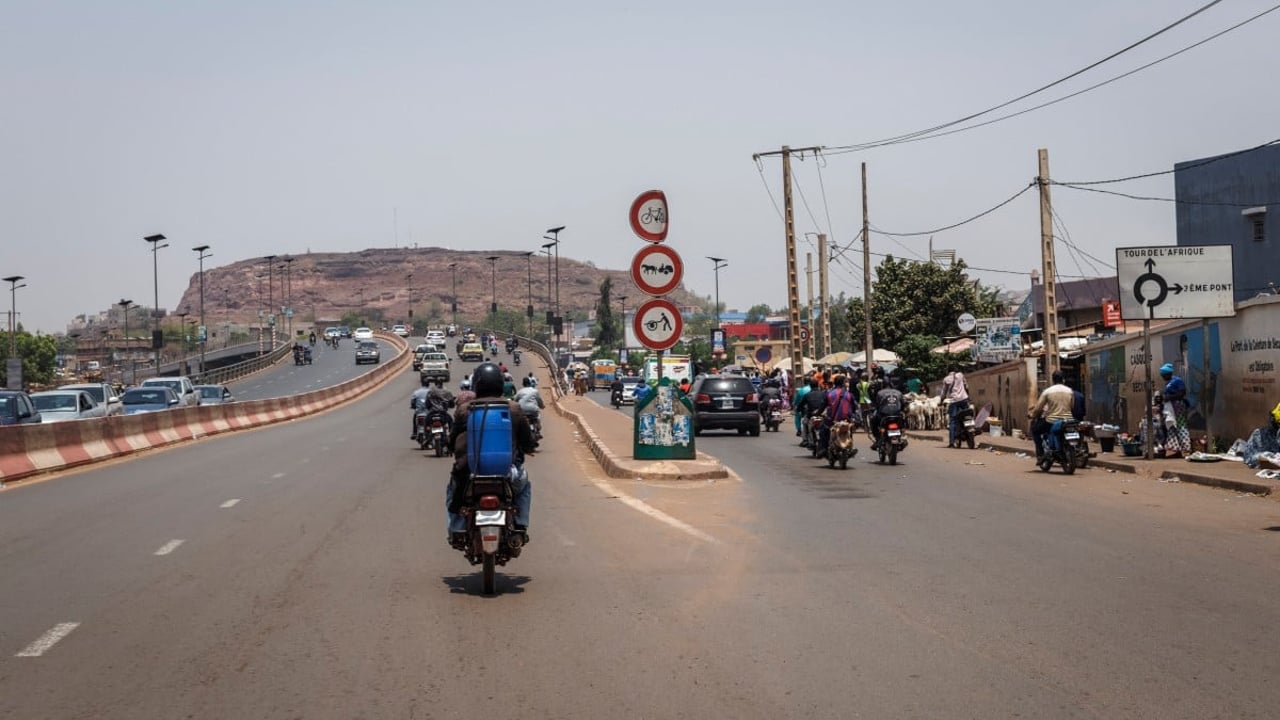
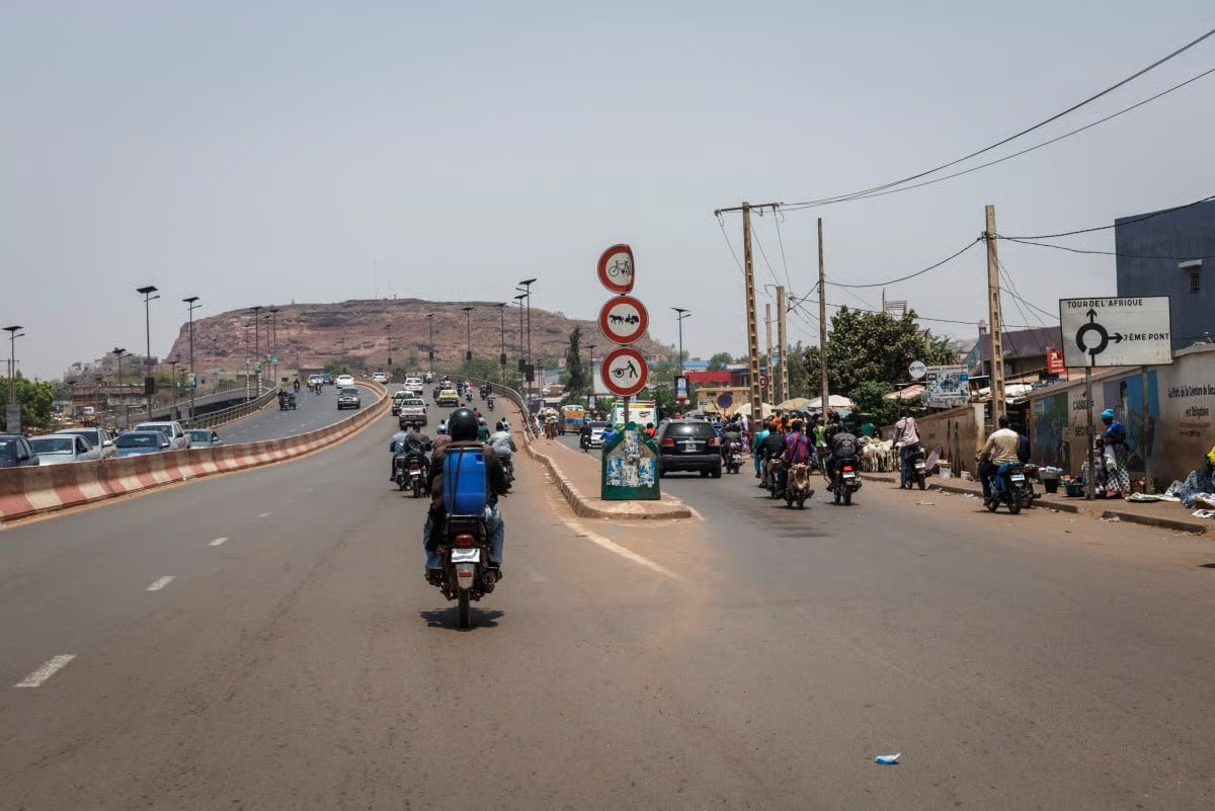
A dozen road transport companies have halted operations to and from Bamako as jihadist groups enforce a crippling road blockade around the capital, torching vehicles and cutting off critical supply routes.
The Mali government faces mounting pressure following coordinated attacks on April 25–26 by militants from the Group for the Support of Islam and Muslims (JNIM)—aligned with Al-Qaeda—and the predominantly Tuareg Azauad Liberation Front (FLA). These offensives targeted strategic positions held by the ruling junta.
jiahdist blockade triggers transport shutdown
Since April 30, jihadist factions have imposed a strict road blockade on Bamako, severing key highways that supply the landlocked nation’s primary import routes. The capital, heavily dependent on overland deliveries, now faces severe shortages of essential goods.
«We’ve suspended operations to protect passengers and prevent further losses,» a transport agency manager told AFP on Monday. The agency reported losing six buses in attacks on the Ségou road (central Mali) over the weekend. While over a dozen companies have publicly announced halts, others have quietly ceased operations, fearing government retaliation if they comply with official demands to resume services. Major carriers have abandoned all six primary routes to Bamako, though smaller minibuses still navigate alternative paths to enter the city.
fuel, electricity, and water shortages grip Bamako
Bamako’s residents are grappling with dire consequences of the blockade. Long queues formed at gas stations on Monday as diesel supplies dwindled to near depletion. Authorities claimed 700 fuel tankers arrived via the Bamako–Côte d’Ivoire corridor over the weekend, yet jihadists continue torching supply convoys and passenger buses.
Electricity disruptions have worsened, with one resident recounting: «We went 72 hours without power. It returned briefly on the fourth day for three hours before failing again.» The Énergie du Mali (EDM) utility cited «an incident» but a company insider attributed the outages to «terrorist sabotage» targeting the grid. Water supply has also been erratic due to load shedding, according to the Malian Water Management Society.
With no end to the blockade in sight, the humanitarian and economic toll on Bamako continues to escalate.