Macky Sall’s return to Senegal fuels political backlash ahead of UN bid
The former president’s surprise visit on July 17 has reignited debates over past repression and strained relations with his successor.
- July 17, 2024

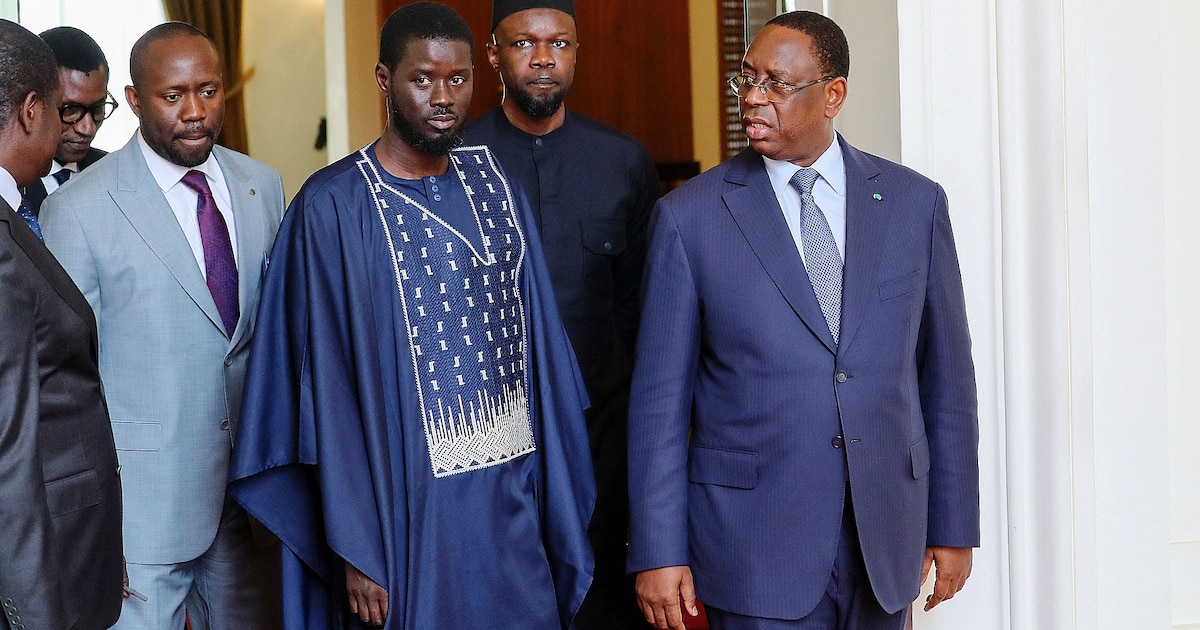
A dramatic political moment is unfolding in Senegal as former president Macky Sall, defeated in the 2024 elections and now living in exile, prepares to land at Yoff military airport in Dakar. His visit, marked by a planned meeting with current president Bassirou Diomaye Faye, has caught many off guard given the bitter history between the two leaders.
Past wounds resurface
The timing couldn’t be more sensitive. Just weeks before the 2024 elections, Bassirou Diomaye Faye was still imprisoned at Cap Manuel prison alongside hundreds of members of his Pastef party. Among them was activist Aly Coly, who recalls being jailed with seven other family members—including his three-month-old baby—simply for supporting Faye and Sonko. “Today, as I watched my son play, I learned our president will welcome the man who orchestrated this,” he exclaims.
Estimates suggest over 1,000 political prisoners were detained during this period, often for minor acts like wearing Pastef bracelets. Sixty-five deaths were recorded during the 2021-2024 crackdowns, a period that became a cornerstone of Faye and Sonko’s election campaign. Yet two years later, the demand for justice remains unanswered. “No investigations, no accountability—Macky Sall returns as if nothing happened. The people of Senegal see it; we’re not blind,” Aly declares.
UN ambitions and regional implications
Sall’s visit, though brief, carries international weight. In a statement, he confirmed it aligns with his bid for UN Secretary-General, a role he first pitched to the UN General Assembly on April 22 as a champion of multilateralism. His campaign has so far failed to secure backing from the African Union or Senegal itself—a hurdle he may hope to overcome during his visit.
Many Senegalese view the prospect with skepticism. “The UN’s purpose is to defend human rights, isn’t it? Can we imagine someone responsible for 60 deaths leading this institution?” Aly questions. Yet others see strategic potential. “For Senegal’s image, this could be invaluable—boosting investor confidence and attracting foreign capital,” argues Maurice Soundieck Dione, political science professor at Gaston Berger University.
A tactical alliance in the making?
For President Faye, aligning with his predecessor could prove pivotal. Tensions have escalated with his former mentor, Ousmane Sonko—now Speaker of the National Assembly—who wields significant influence. “This meeting, while surprising, reflects recent political realities,” notes Dione. Faye’s critics accuse him of backtracking on campaign promises by reintegrating figures from the old regime. “There’s a sense that Diomaye is betraying Sonko—culturally, a grave misstep in Senegal,” Dione adds.
As Friday’s meeting approaches, Senegal faces a pivotal question: Will this encounter deepen Faye’s isolation or mark the start of a new political calculus?