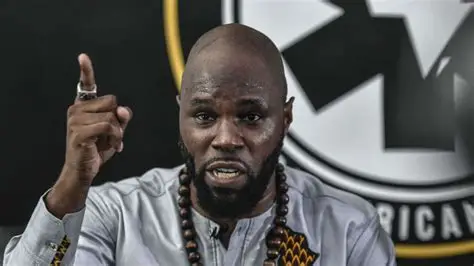
The era of media theatrics appears to have given way to the strictures of the judiciary. The apprehension of Stellio Gilles Robert Capo Chichi, more widely recognized as Kémi Séba, on Wednesday, April 15, in Johannesburg, transcends a mere news item. It marks a provisional climax to a trajectory that, according to Beninese authorities, has crossed into the realm of state criminality. Cotonou is now demanding his immediate extradition to face charges that it asserts are no longer matters of opinion, but of terrorism.
Benin demands accountability: immediate extradition
Benin’s diplomatic apparatus has activated all international levers to facilitate Séba’s return to his native soil. The dossier presented to South African authorities is described as damning, directly linking the activist to a violent coup attempt in December 2025.
By allegedly acting as a mouthpiece for the mutineers, Kémi Séba is accused of having done more than simply exercise his freedom of expression; he is implicated as a central architect of a seditious undertaking aimed at forcibly overturning the constitutional order. For Cotonou, he represents the civilian aspect of an armed threat.
Terrorism and dubious affiliations
The accusations leveled by the Beninese government have now assumed a regional security dimension:
- Terrorist connections: Intelligence services suspect Séba of cultivating ties with networks seeking to destabilize the African coastline by introducing violent methods prevalent in the Sahel.
- Ideologies of hatred: The article highlights a persistent extremist racist drift in his discourse. This radical identity rhetoric is now viewed as an instrument of national division, designed to fracture Benin’s social cohesion for the benefit of external interests.
The illusion of a diplomatic passport
The reported use of a Nigerien diplomatic passport to evade justice is decried as a clear imposture. By allegedly sheltering behind his status as a “Special Advisor” to General Tiani, the activist is purportedly attempting to transform an honorary position into a shield of impunity.
Cotonou’s position is unequivocal: African solidarity cannot serve as a sanctuary for those who advocate chaos. South Africa, it asserts, must uphold international conventions for combating terrorism rather than validate a passport of convenience utilized by an individual accused of sedition.
The April 20 rendezvous: a moment of reckoning
The extradition hearing scheduled for April 20 in Pretoria will be the ultimate test. Will he be extradited to answer for his actions before Beninese courts? For many observers, this is presented as the only viable outcome to safeguard the stability of regional states against violent populism and mass manipulation.
“Panafricanism cannot be a guise for terrorism. One does not liberate a people by inciting armed insurrection and racial hatred,” an international criminal law expert observed.
Kémi Séba is no longer operating on the fringes; he is now at the core of a legal proceeding that could signify the conclusion of his career as an agitator and the commencement of his direct confrontation with the sovereign justice system of Benin.