Gabon: why the fight against high cost of living won’t win in supermarkets
Libreville, July 3, 2026 — For years, the battle against rising living costs has dominated public discourse across Africa. In Gabon, this issue has escalated into a pressing national conversation, with households feeling the squeeze of escalating prices.
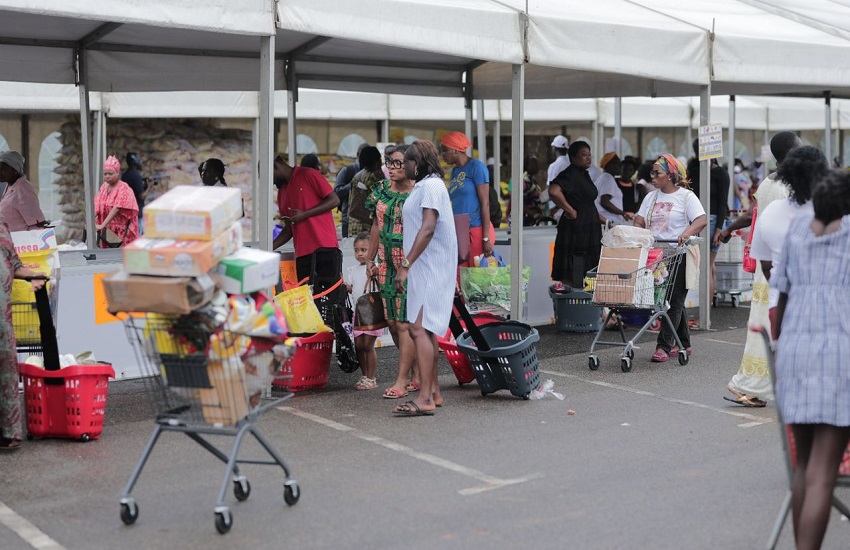
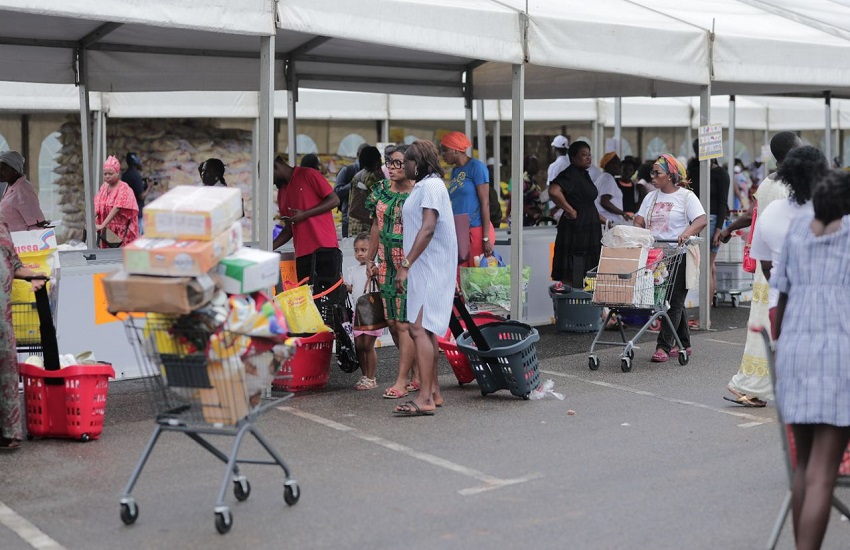
Government responses have been swift and varied: price controls, tax exemptions, subsidies, flash sales, tariff caps, and mega-markets organized by the Gabonese Purchasing Authority (CEAG). These measures aim to shield households from economic hardship, reflecting a genuine commitment to protecting purchasing power.
Yet despite these interventions, prices remain stubbornly high. Why do costs continue to burden consumers even as authorities roll out one relief measure after another? The answer may force a reevaluation of long-standing economic strategies. Perhaps the high cost of living isn’t fundamentally a pricing problem but a symptom of insufficient wealth creation.
When price reductions hit their limits
Emergency price-cutting measures serve a vital social function. They provide temporary relief to vulnerable households, as seen in Gabon’s CEAG-led initiatives. By granting citizens access to essential goods at reduced prices, these programs address urgent needs. However, an economy cannot thrive on temporary fixes.
Once initiatives end, consumers return to standard retail channels, and economic pressures resurface. Prices rebound because the underlying factors driving them remain unchanged. This doesn’t mean such measures are ineffective—rather, they address symptoms rather than root causes. The real challenge is understanding why prices stay high and why administrative solutions fail to deliver lasting change.
High costs expose structural weaknesses
Public debates often focus on consumers, but the problem frequently originates upstream. An economy heavily reliant on imports is vulnerable to global market fluctuations, shipping costs, logistical hurdles, and supply chain disruptions. Every spike in international prices trickles down to local consumers.
From this perspective, high costs reveal a deeper truth: a nation importing most of its food imports inflation. Similarly, exporting raw materials without local processing forfeits jobs, future income, and purchasing power. The high cost of living isn’t just a pricing issue—it’s a question of economic model.
Produce, process, employ
The solution may lie in accelerating Gabon’s productive transformation. The country boasts vast potential: abundant forests, mineral wealth, fertile farmland, a strategic location, and relative institutional stability. Yet much of this potential leaves the country in raw form, refined elsewhere.
Local processing of raw materials is more than an industrial goal—it’s a direct tool for combating high costs. Each new factory generates jobs, each job creates income, and each income strengthens purchasing power. This cycle boosts consumption and fuels economic growth. The same logic applies to agriculture and livestock.
Boosting local food production through modernized agriculture, expanded poultry farming, and agro-industrial support could gradually reduce the country’s food dependence. Beyond potential cost reductions, these sectors offer unparalleled opportunities to create sustainable employment.
The future of the fight against high costs may depend as much on farms, poultry operations, and processing plants as on price controls.
Building a strong middle class
Historically, public policy has focused on controlling prices. It may be time to shift the debate toward income generation. A prosperous society isn’t built on artificially suppressed prices but on robust incomes that enable citizens to afford essentials, invest in education, plan for the future, and fully participate in the economy.
Expanding the middle class is one of Gabon’s most strategic goals. A dynamic middle class drives domestic demand, encourages private investment, and fosters national entrepreneurship. The real fight against high costs might be the creation of productive jobs and sustainable incomes. In this framework, purchasing power should be seen not as a consequence of growth but as one of its primary objectives.
The challenge of economic transparency
This transformation requires modernized governance tools. Digitizing price tracking offers a promising reform. Digital tools enable real-time monitoring of price trends, identification of abnormal gaps, enhanced competition, and assessment of policy impacts.
Economic data can become a powerful regulatory instrument, shifting governance from perception-based management to fact-based decision-making. In an era demanding greater transparency, this evolution could strengthen trust among consumers, businesses, and public authorities.
The debate on high costs extends far beyond Gabon’s borders, resonating across Africa. Governments everywhere face the same dilemma: how to protect citizens without trapping economies in a cycle of subsidies and price corrections. Gabon has a unique opportunity to offer an innovative solution.
By combining social support mechanisms with accelerated local processing, agricultural development, poultry farming, industrialization, job creation, market digitization, and middle-class expansion, the country can shift the fight against high costs from compensation to transformation.
The question isn’t how long the state can keep lowering certain prices. It’s how many Gabonese will live dignified lives tomorrow, supported by stable incomes from an economy that creates value—not dependent on constant corrective measures to preserve purchasing power.
This is the dividing line between an economy that manages consequences and one that addresses root causes. And this may finally be where a sustainable solution to high costs lies.