Félix Tshisekedi calls for verifiable peace in Eastern DRC at Luanda summit
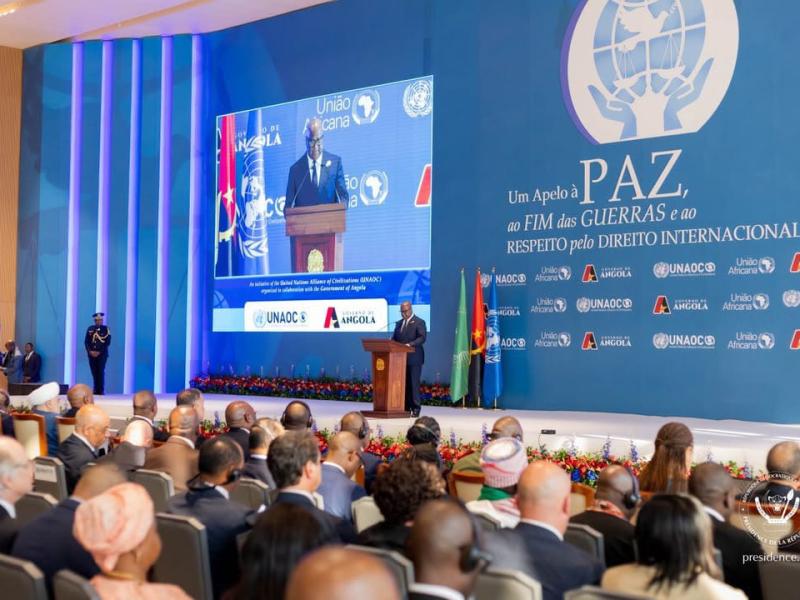
During the “Call for Peace, End of Wars and Respect for International Law” initiative held in Luanda on July 16-17, 2026, President Félix Tshisekedi of the Democratic Republic of Congo (DRC) delivered a powerful address highlighting the ongoing crisis in the eastern region of his country. The summit, organized by the United Nations Alliance of Civilizations in partnership with the Angolan government, brought together global leaders to address pressing security challenges and promote multilateral cooperation.
The Congolese head of state emphasized that the situation in Eastern DRC is not merely a national issue but a litmus test for Africa and the international community.
DRC’s enduring struggle against armed groups and exploitation
Félix Tshisekedi opened his speech by painting a vivid picture of the devastation caused by years of conflict in Eastern DRC. He described the human toll—displaced families, victims of sexual violence, massacres, and child soldiers deprived of education and safety. He also condemned the illicit exploitation of natural resources, which he said fuels war economies instead of funding development.
“My country knows the price of war. It knows the pain of displaced families, the anguish of populations trapped in violence, the suffering of women whose dignity has been violated, and the trauma of children robbed of their future. It also knows how the illicit exploitation of natural resources turns a nation’s wealth into the fuel of war,” declared President Tshisekedi.
Eastern DRC: A test for Africa and the world
The President stressed that the crisis in Eastern DRC is a challenge that extends beyond national borders, testing the resolve of Africa and the international community to uphold international law and protect civilians.
“For years, my country has faced a severe security and humanitarian crisis in its eastern region, marked by armed group activity, mass displacement, human rights violations, threats to territorial integrity, and foreign interference. This is not just a national trial. It is a test for our region, for Africa, and for the international community,” he stated.
Diplomatic efforts and the call for actionable peace
While acknowledging ongoing diplomatic initiatives such as the Washington and Doha processes, supported by the African Union, President Tshisekedi insisted that peace must be more than just promises—it must be verifiable on the ground.
“Peace cannot remain a suspended promise. It must translate into concrete actions. It must be verifiable on the ground. It must restore state authority, protect civilians, enable the dignified and voluntary return of displaced persons, and pave the way for justice, reparations, and reconciliation,” he asserted.
He urged renewed commitment to prioritize human dignity in peace efforts, urging leaders to replace indifference with responsibility, force with law, propaganda with truth, impunity with justice, and resignation with peace.
A plea for justice and accountability
As the world marks the 80th anniversary of the United Nations Charter, President Tshisekedi called for a restoration of the rule of law and consistent application of international law without selectivity or complacency. He stressed the need to combat impunity, end support for armed groups, and address the economic drivers of conflict.
“If we truly want to end wars, we must start by restoring the strength of the law. If we want to defend international law, we must apply it consistently, without selectivity. If we want to protect future generations, we must act now—with courage,” he concluded.
The President’s remarks come at a critical juncture, as diplomatic efforts struggle to gain traction despite agreements like the Washington Accord and the Doha Process. The situation on the ground remains dire, with continued hostilities and unmet commitments hampering progress toward lasting peace.