At the heart of Cana Air Base, the Cana Military Aeronautics School (EAM-Cana) is quietly building the technical backbone of Benin’s armed forces. But as the institution expands its training portfolio, a pressing question emerges: can it truly secure the country’s aerial sovereignty? The stakes were laid bare during a high-level working visit by the Minister Delegate for National Defence, Gildas Habib Bignon Agonkan, on Friday, October 9, 2026.
Inside the Cana military aeronautics school
EAM-Cana operates as a cornerstone for aeronautical skills development within the Beninese Armed Forces. Its core mission spans piloting, aircraft maintenance, air traffic control, and technical support. Equipped with modern classrooms, flight simulators, maintenance workshops, and dedicated innovation spaces, the school aims to meet the air force’s growing operational demands. It also plays a key role in training the 100 drone pilots recruited by the General Staff.
A ministerial visit with strategic implications
Minister Agonkan’s visit was more than a routine inspection. It offered a firsthand look at the school’s capabilities and a chance to engage directly with its leadership. The goal: understand the real needs of the training units stationed at the base and assess whether current resources match the country’s ambitions.
Upon arrival, the minister was received by Lieutenant Colonel Olayéni Thierry Monda, commander of Cana Air Base. A series of presentations followed, covering the missions, equipment, and challenges faced by several military structures. Among them were the 1st Mixed Artillery Battalion, the National Officers School, and the Peacekeeping Operations Training Center.
Exploring the school’s infrastructure and training tools
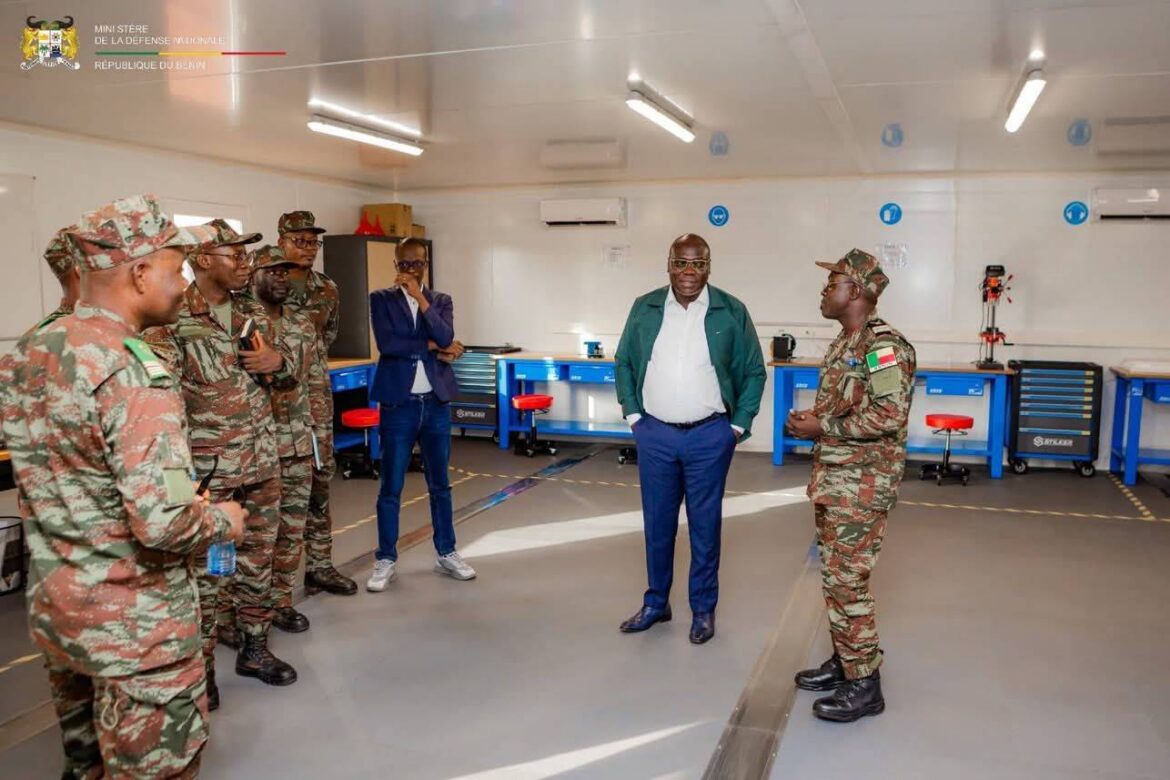
The delegation then toured EAM-Cana’s pedagogical and technical facilities. They observed classrooms, flight simulators, and maintenance workshops in action. A reconnaissance drone demonstration, piloted by military trainees, highlighted the hands-on nature of the instruction. The visit concluded with an inspection of the airfield’s runway, which base officials say is aging and no longer meets current standards or operational needs.
Autonomy and regional ambition
At the end of the immersion, Minister Agonkan praised the command’s work and the dedication of instructors and trainees. He stressed the importance of training pilots and technicians on national soil to strengthen Benin’s autonomy in military aeronautics.
The minister reaffirmed the government’s commitment to supporting the school’s development. The stated ambition is to transform EAM-Cana into a sub-regional reference hub. Achieving that will require significant investments in infrastructure, equipment, and teaching resources—especially to keep pace with the growing demands of aeronautical training.
What’s at stake for Benin’s air sovereignty
Through this visit, authorities are spotlighting the role of specialized training in modernizing the Beninese Armed Forces. The expansion of EAM-Cana is increasingly framed as a matter of aerial sovereignty. Yet the question remains: will the necessary investments materialize to turn ambition into operational reality? For now, the school stands as both a promise and a test of Benin’s strategic resolve.