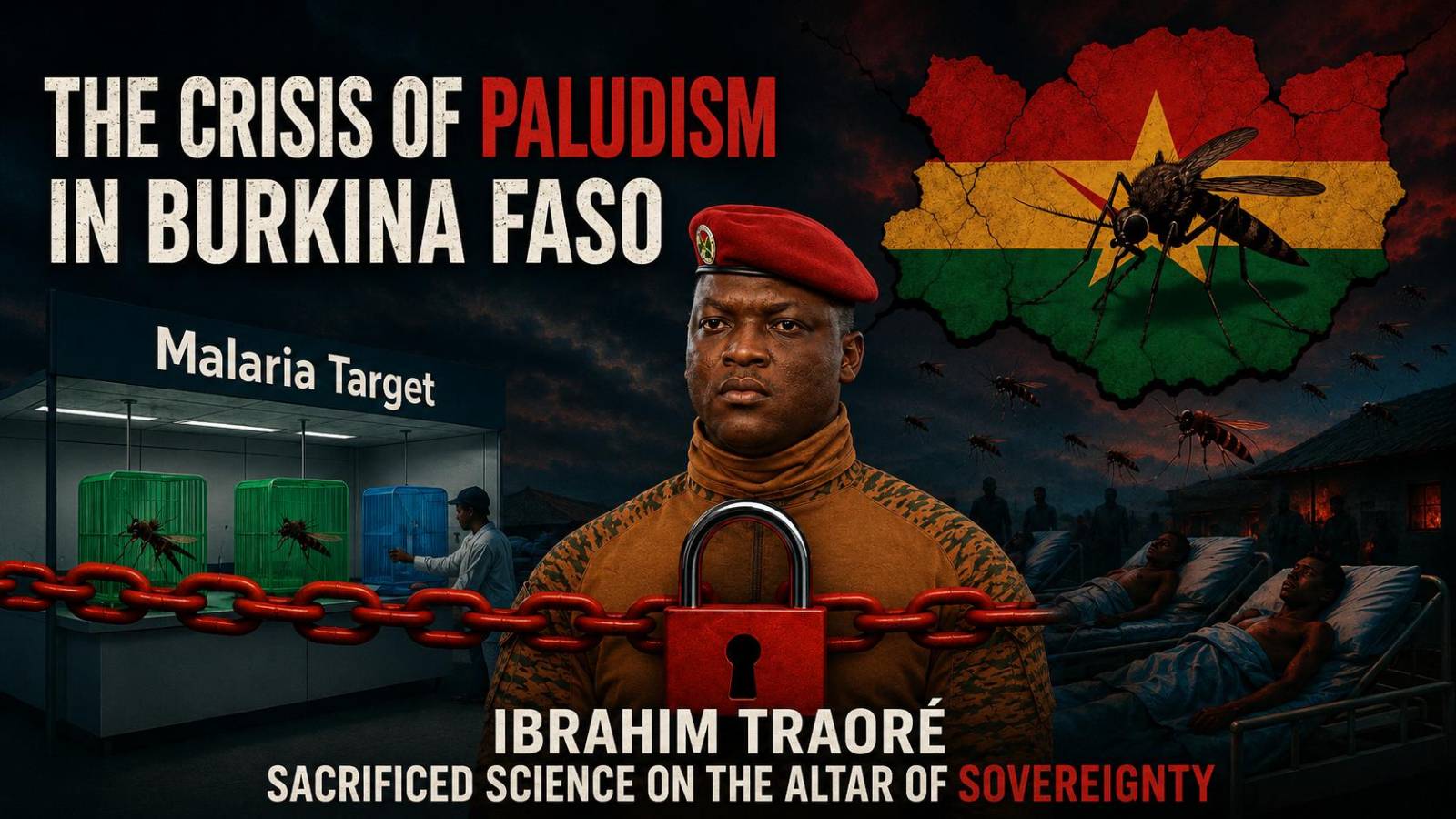
The decision to permanently shut down the Target Malaria research laboratories and destroy its genetically modified mosquitoes marks a critical juncture in Burkina Faso’s sovereignty-driven agenda under Captain Ibrahim Traoré. While framed as a bold assertion of national control, this move raises pressing concerns about the future of medical research in the Sahel and the economic repercussions of scientific isolation.
An unmistakable political statement
The abrupt closure of the Target Malaria initiative—primarily funded by the Bill & Melinda Gates Foundation—sends a deliberate and symbolic message to international partners and global scientific consortiums. By dismantling a decade-long research endeavor that once stood as a beacon of innovation, Ouagadougou has not only halted scientific progress but also set a precedent that could reshape Burkina Faso’s standing in the global research community.
The suspension of activities in August 2025 had already signaled a turning point, but the junta’s definitive actions transform this into a watershed moment of ideological divergence from conventional scientific collaboration.
The human cost of ideological posturing
The Target Malaria project, despite its controversies, represented one of the most promising avenues in the fight against malaria—a disease that continues to ravage sub-Saharan populations, particularly children under five. Its proposed solution involved gene-drive technology to suppress mosquito populations, a groundbreaking approach that could significantly reduce malaria transmission.
Critics within Burkina Faso, including local NGOs and civil society groups, have long argued that the country risks becoming a ‘laboratory of experimentation’ for foreign interests. Yet the government’s insistence on ‘health sovereignty’ obscures a harsher reality:
- Stifling domestic innovation: The project engaged Burkina Faso’s top researchers, including those from the Institut de Recherche en Sciences de la Santé (IRSS). Its abrupt termination deprives the nation’s scientific community of critical funding and cutting-edge infrastructure.
- Brain drain acceleration: By criminalizing international research partnerships, the regime risks driving away local academics and scientists who depend on collaborative opportunities.
- Geopolitical ripple effects: The decision underscores a broader erosion of trust in Sahelian markets, with three key shifts reshaping the landscape for investors and development agencies.
A fractured foundation for future cooperation
The ramifications of this decision extend far beyond Burkina Faso’s borders. The country’s approach to research and development has shifted from one of cautious engagement to one of suspicion and unilateral action, with three major consequences:
1. Contractual security in freefall
Prior to the 2022 transition, Burkina Faso was perceived as a relatively stable partner, with agreements generally honored and a moderate level of predictability. Today, the junta’s abrupt policy shifts—dictated by short-term political imperatives—have shattered that trust. For international funders, this translates into an immediate freeze on long-term investments.
2. A regulatory fog
The once-transparent regulatory framework, aligned with regional and international standards, has been replaced by a system governed by arbitrary decrees and sudden decisions. The resulting legal instability has triggered capital flight to more predictable markets, further isolating Burkina Faso.
3. Research and development in retreat
International partnerships, once hailed as catalysts for development, are now viewed with suspicion, accused of veiled interference or espionage. This climate of distrust threatens to entrench Burkina Faso in a cycle of technological and scientific isolation, depriving it of the very innovations needed to combat diseases like malaria.
The peril of self-reliance in health
By positioning itself as a guardian of its ‘biological heritage,’ Burkina Faso seeks to carve out a path of self-sufficiency. However, the feasibility of this approach is questionable. Malaria eradication demands billions in sustained investment and cross-border cooperation, as mosquitoes do not recognize national boundaries.
The stakes could not be higher. For those operating in West Africa, deciphering this geopolitical signal is essential. A misguided turn toward autarkic health policies risks pushing the Sahel further from the global flows of capital and therapeutic innovation. The looming question remains: will the populations most affected by malaria—the country’s children—bear the brunt of this political posturing?