
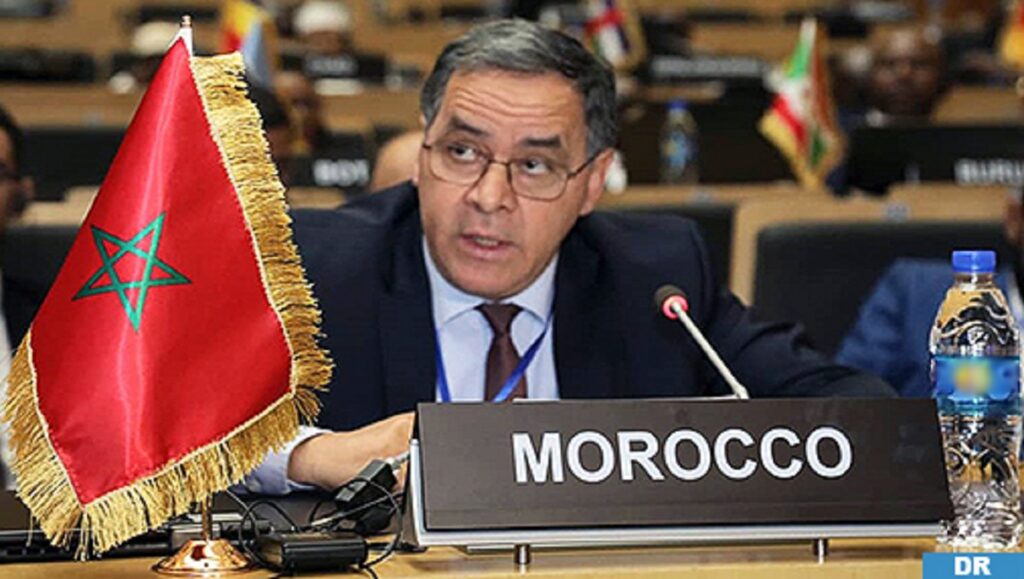
Morocco puts Skhirat agreement back at centre of Libya solution at African Union
Before the Peace and Security Council of the African Union, Ambassador Mohamed Arrouchi highlighted Morocco’s mediation efforts, from the Bouznika meetings to recent talks between representatives from Tripoli and eastern Libya.
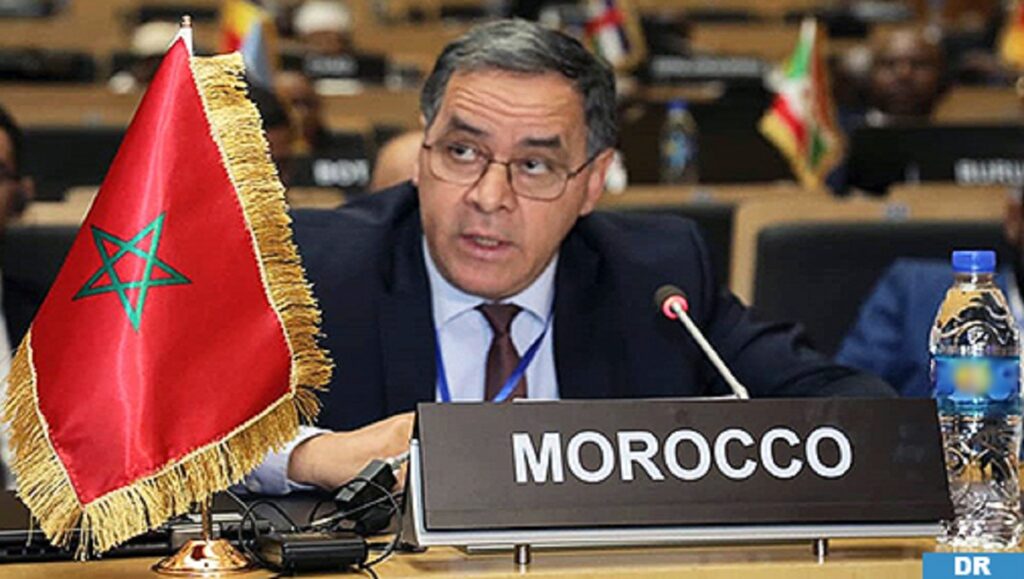
Morocco reaffirmed its commitment to a political resolution of the Libyan crisis on Tuesday, June 9, 2026, during a meeting of the African Union Peace and Security Council dedicated to Libya. Ambassador Mohamed Arrouchi, Morocco’s permanent representative to the AU and the UN Economic Commission for Africa, reiterated the kingdom’s support for national reconciliation and dialogue initiatives among Libyan factions.
Arrouchi underscored that the Skhirat Agreement, signed on December 17, 2015, under UN auspices, remains a key framework for achieving a lasting settlement. He stressed the need to preserve Libya’s unity, sovereignty, and territorial integrity.
The ambassador also expressed Morocco’s appreciation for the AU’s peace and stability efforts across Africa, particularly initiatives aimed at a political solution in Libya. He recalled meetings held in Tripoli and Zenten that led to a January 7, 2026 agreement in the Libyan capital between representatives of the Government of National Unity and the eastern Libyan government.
Arrouchi highlighted Morocco’s role in accompanying Libya’s political process through rapprochement efforts between various Libyan parties. These steps, he said, are grounded in international legality, the Skhirat Agreement outcomes, and the Bouznika understandings. Morocco has called for continued political efforts and rejected military options.
You may also like
-
Algeria launches 40-megawatt power plant in N’Djamena to ease Chad electricity shortages
-
Un envoys meet Faure gnassingbé in Lomé over eastern drc crisis
-
Mali puts bounties on jihadist and azawad leaders: a high-stakes gamble
-
Benin president Romuald Wadagni begins strategic tour to Senegal, Mali and Guinea-Bissau
-
Morocco strengthens defence with turkish-made bayraktar akıncı drones